
Last updated October 30, 2026
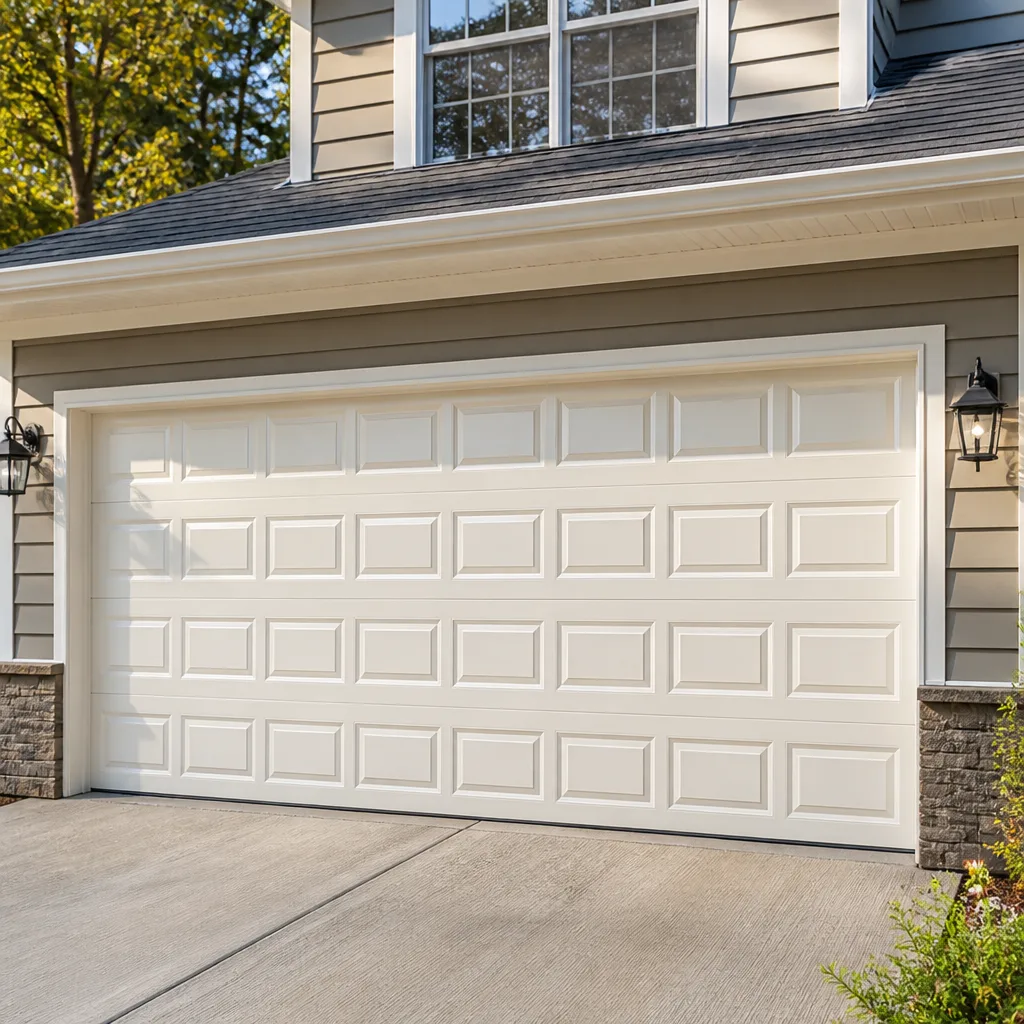 Raised-panel steel
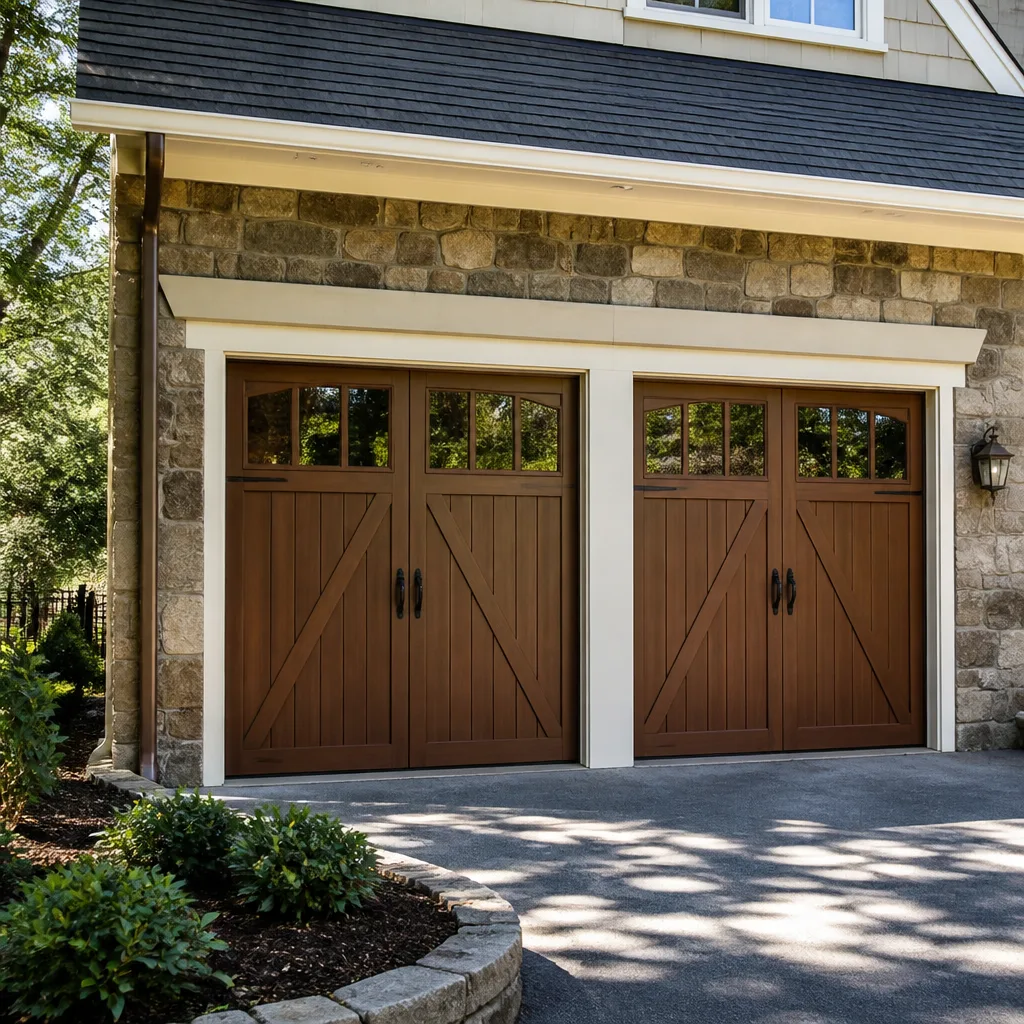 Carriage house
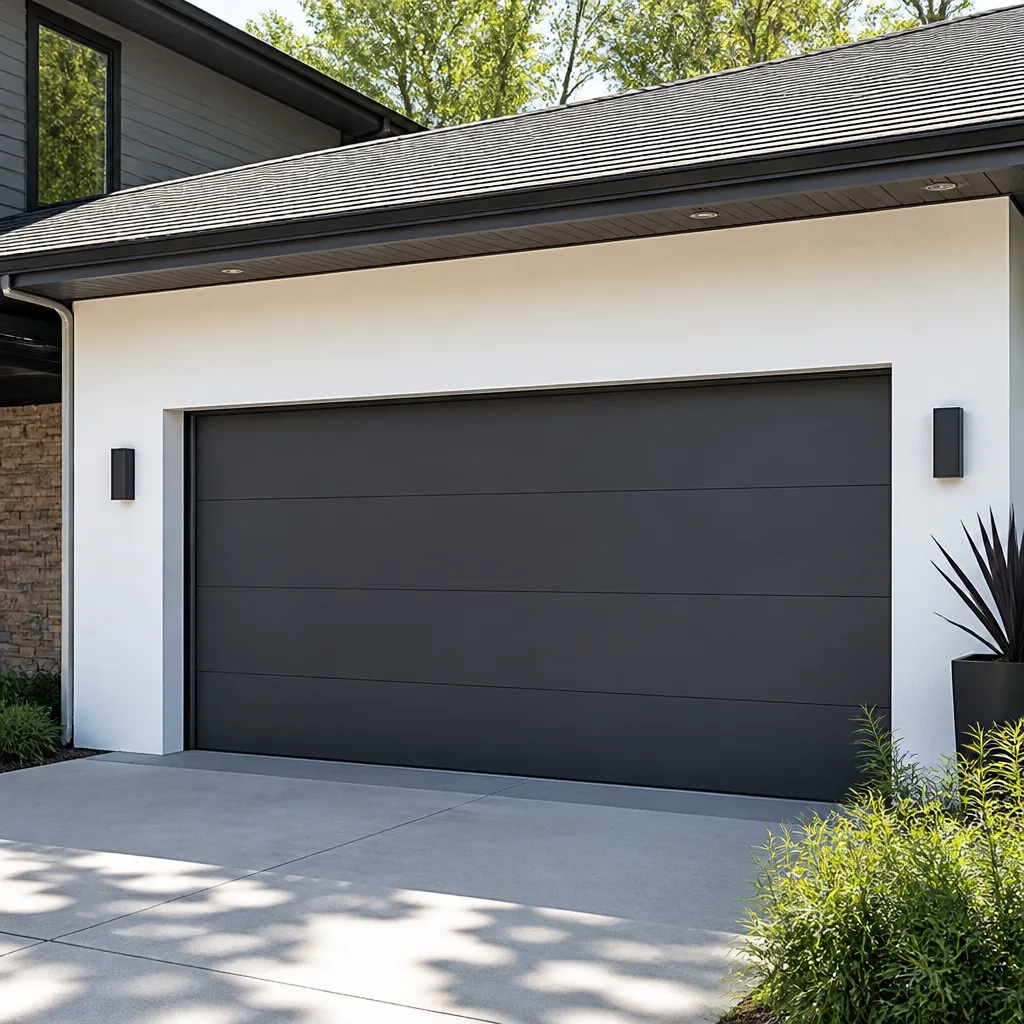 Modern flush
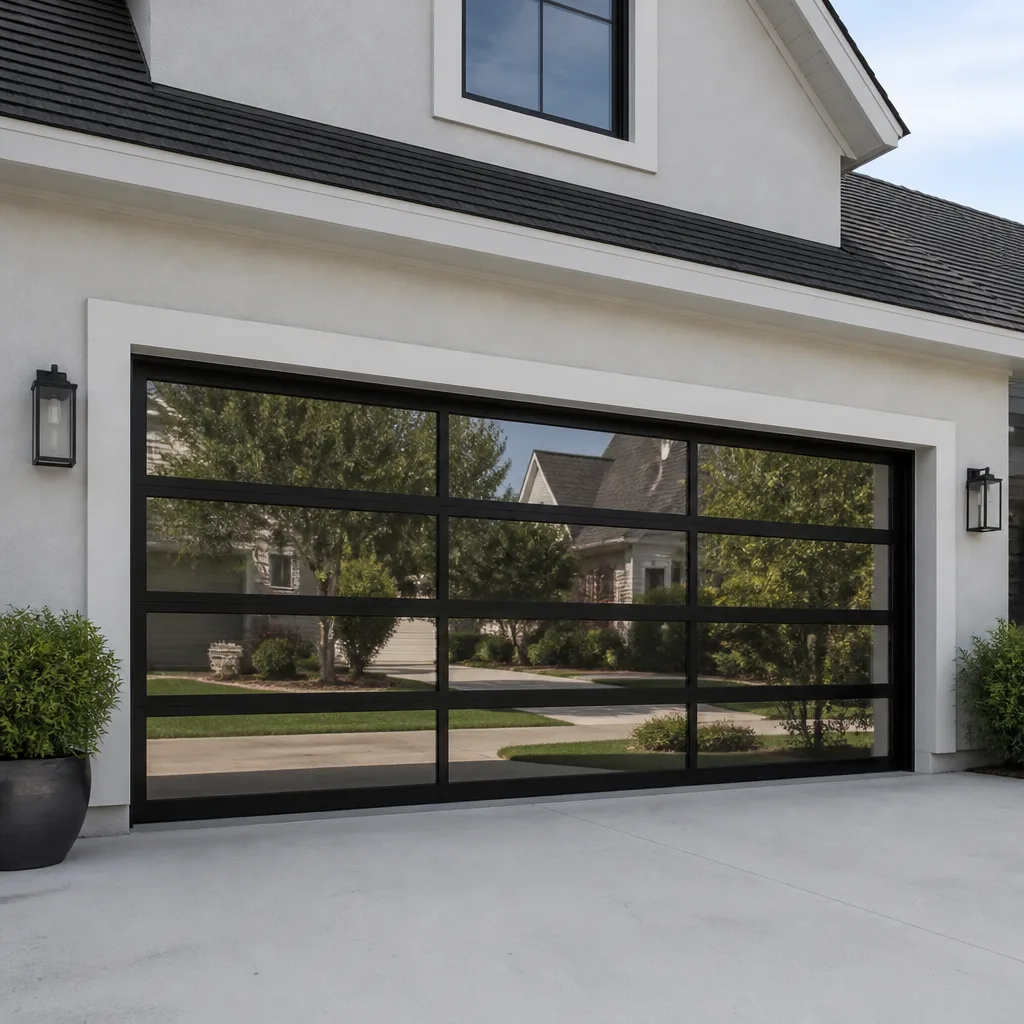 Full-view glass
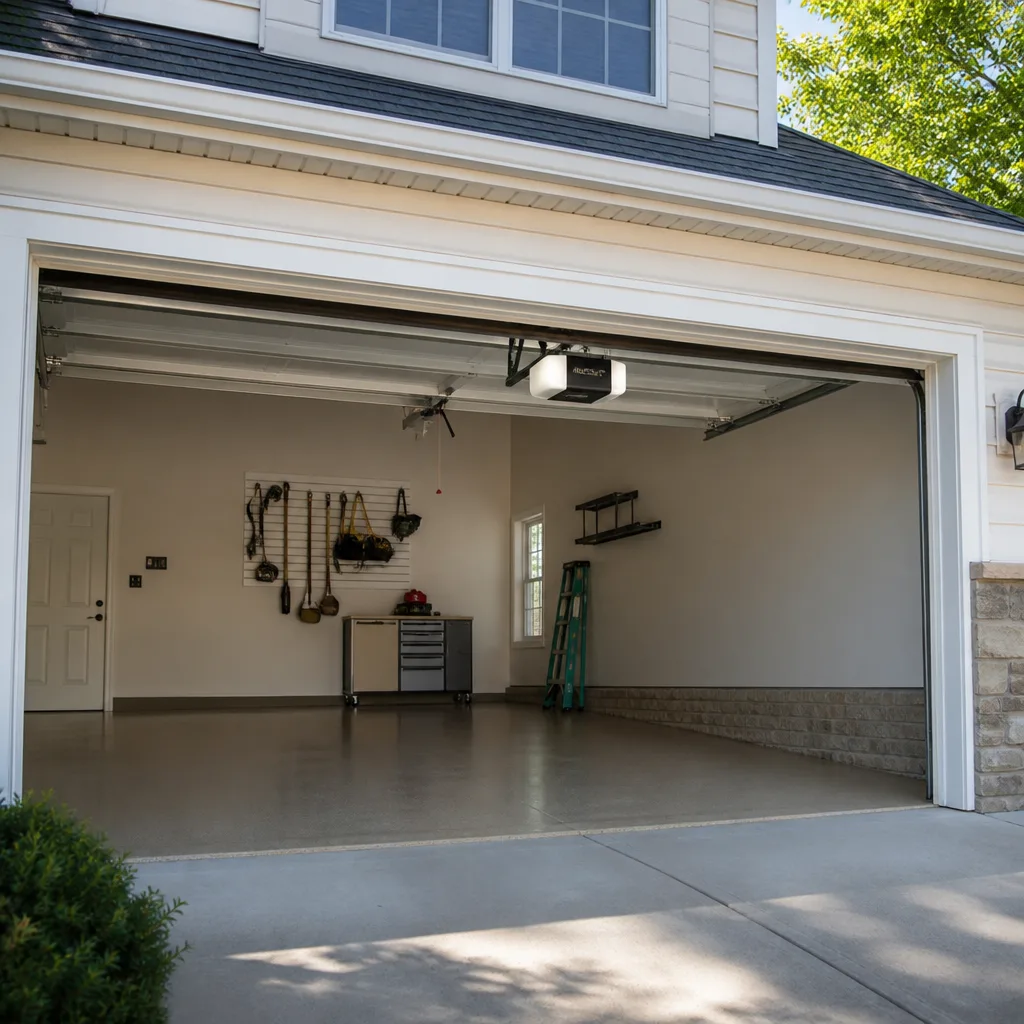 LiftMaster openers
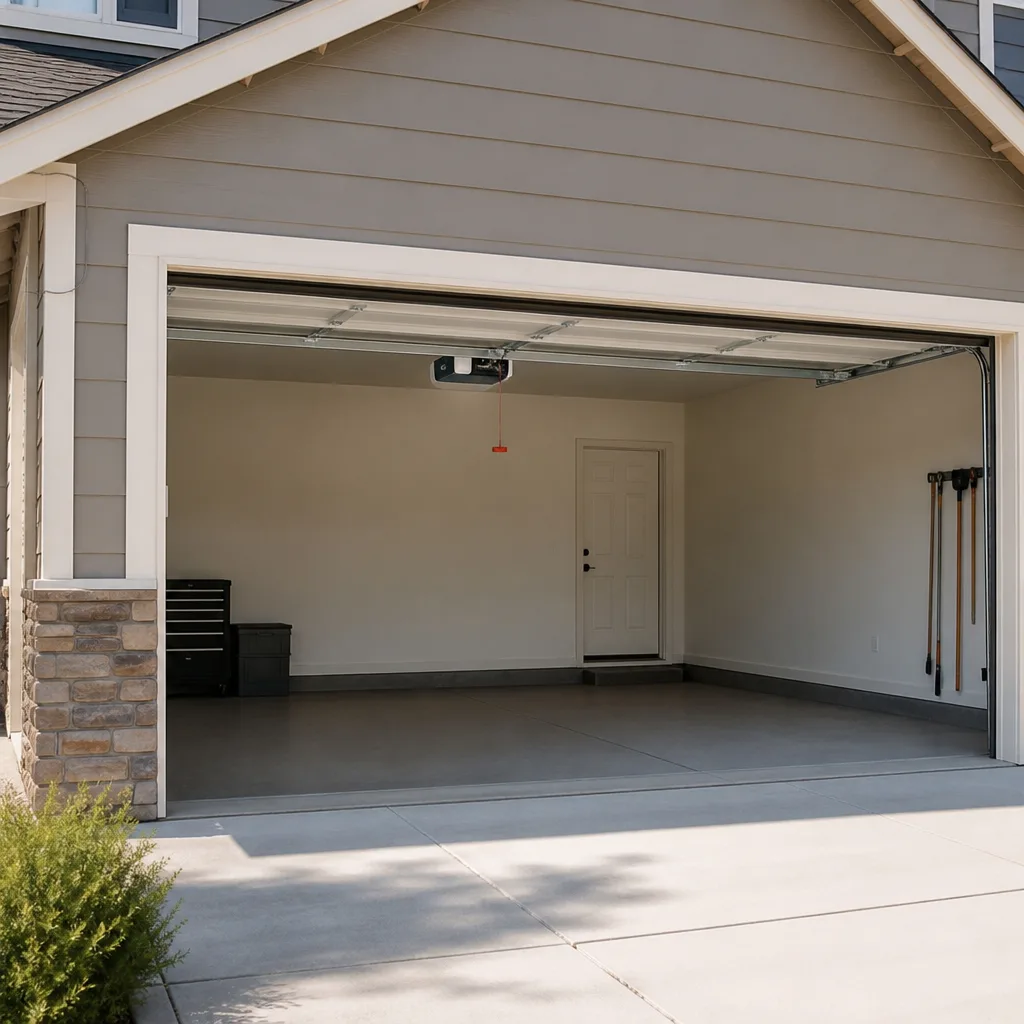 Chamberlain openers
Full 25-point door and opener safety check with every visit - springs, cables, rollers, tracks, and your LiftMaster or Chamberlain opener included
You get a price before we start. It does not change when the truck arrives.
Get your free estimateChoosing the Right Garage Door Brand: A Buyer’s Guide for St. Petersburg
A homeowner in St. Petersburg picked a garage door brand from a national magazine’s “best of” list, drawn in by the sleek photos and the promise of curb appeal. Two years later, a wind-blown branch punched a hole in one panel. The replacement section took eleven weeks to arrive because no distributor in Pinellas County stocked that brand. In St. Petersburg, brand choice isn’t a style decision first. It’s a parts-availability, corrosion-resistance, and wind-code decision. This guide explains the three factors that actually determine whether a garage door brand serves you well here, and walks through how the major brands compare on each. For a deeper dive, see our The Complete Guide to Garage Door in St. Petersburg.
Styles & brands we work with
Quick Answer
The best garage door brand in St. Petersburg is the one with an established local parts network in Pinellas County, corrosion-resistant construction rated for salt air, and a Florida Product Approval (FPA) number for the wind zone where your home sits. Among national brands, Clopay, Amarr, and Wayne Dalton consistently offer the broadest combination of coastal-rated finishes, wind-load-certified models, and local dealer coverage in the Tampa Bay metro. The wrong brand choice becomes expensive the first time you wait weeks for a replacement panel that no one stocks in St. Petersburg.
Table of Contents
- Florida Product Approval: The Number That Decides What You Can Install
- Coastal Corrosion: Why Salt Air Rewrites the Brand Conversation
- Local Parts Availability: The Factor No Magazine Review Measures
- Eight Major Brands Compared for St. Petersburg Homes
- Opener Brand Alignment: Matching Door and Motor
- Steel Gauge and Wind Load: What the Spec Sheet Actually Tells You
- The Service Network Question: Verify Before You Buy
- Common Mistakes to Avoid
- When to Call a Professional
- Frequently Asked Questions
- The Bottom Line
Florida Product Approval: The Number That Decides What You Can Install
A garage door without a Florida Product Approval number cannot legally be installed on most homes in Pinellas County. That’s not a preference. It’s building code. The FPA system exists because wind-driven debris and hurricane-force pressure differentials turn an unrated garage door into a structural weak point that can compromise the entire roof system when the door fails. In St. Petersburg, where wind speeds in a named storm routinely exceed 130 mph, the FPA number tells you the door was tested to meet those loads.
Here’s what the FPA number actually means: the manufacturer submitted the door to an independent testing lab, which subjected it to simulated wind pressure and impact testing under Florida Building Code protocols. The approval certifies the maximum design pressure the door can withstand, expressed in pounds per square foot. Larger doors and doors with windows typically carry lower pressure ratings than solid panel doors of the same construction.
How to look up an FPA number for any brand or model
- Get the exact model name and manufacturer from the dealer or manufacturer website.
- Go to the Florida Department of Business and Professional Regulation’s product approval database.
- Search by manufacturer name. Amarr, Clopay, Wayne Dalton, and Raynor all maintain active FPA listings for dozens of models.
- Match the model number, door size, and impact rating to the listing. Check the approval is current and not expired.
- Save a copy of the approval page. Your installer will need the FPA number to pull the permit in St. Petersburg.
We check FPA compliance on every garage door installation in St. Petersburg before quoting. A door that looks great but lacks the right approval number creates a permit problem the homeowner only discovers after the old door is already off the opening.
Coastal Corrosion: Why Salt Air Rewrites the Brand Conversation
St. Petersburg sits on a peninsula between Tampa Bay and the Gulf of Mexico. Salt spray, high humidity, and afternoon thunderstorms combine to accelerate corrosion on any metal component exposed to the elements. A garage door that lasts twenty years in Atlanta may show rust staining at the bottom stiles within five years here. The brand question is really a materials question: does that brand offer corrosion-resistant construction as a standard option, or only as an upgrade?
The meaningful difference is in the construction of the panel.
- Galvanized steel panels carry a zinc coating that bonds to the steel at the mill level. The best coastal-rated doors use hot-dip galvanized G60 or G90 steel, where the number refers to the coating weight per square foot. More zinc means slower corrosion.
- Aluminum-core panels skip the rust problem almost entirely. Aluminum oxidizes but doesn’t rust through the way steel does. The trade-off: aluminum panels dent more easily and typically cost 20-30% more.
- Standard steel with primer and paint relies entirely on the paint film to protect the steel. Once a scratch or chip exposes bare metal, rust starts. In salt air, that rust spreads under the paint and bubbles the finish.
From what we see in St. Petersburg, doors with exposed fasteners at the bottom panel are the first to show rust, regardless of brand. The bottom panel sits closest to the salt spray that kicks up from driveways and road surfaces. Brands that use composite bottom stiles or sealed end caps hold up measurably better.
Local Parts Availability: The Factor No Magazine Review Measures
National garage door “best of” lists evaluate features, finishes, and price. They cannot evaluate what happens when you need a replacement section after a storm or a careless driver backs into the door. In coastal Florida, storm season makes parts availability an urgent concern. A door that takes four weeks for a matching panel during hurricane season leaves an opening exposed to weather and security risks.
St. Petersburg sits inside a major distribution corridor for building materials, but not every brand maintains local warehouse coverage. Brands with established Pinellas County dealer networks stock replacement sections, springs, and hardware locally. Brands with weaker coverage ship parts from Orlando, Jacksonville, or out of state. The difference is measured in days versus weeks.
Here’s how to verify parts availability before you buy:
- Ask the dealer which brands they can source replacement panels for same-week in St. Petersburg.
- Ask which brands require a factory order for a single replacement panel.
- Call two independent garage door repair companies and ask which brands they can service same-week for a panel replacement.
- Check whether the brand’s distributor network includes a Pinellas County or Tampa Bay location.
When a brand’s local dealer network is thin, every repair becomes a logistics problem. The eleven-week panel wait described in the opening of this guide is not an outlier. We hear stories like it throughout Pinellas County every storm season.
Eight Major Brands Compared for St. Petersburg Homes
We work on eight of the most widely owned garage door brands in American homes: LiftMaster, Chamberlain, Genie, Clopay, Amarr, Wayne Dalton, Craftsman, and Raynor. That factory-level familiarity across the residential market means we evaluate brands by mechanics and materials, not by loyalty. Here’s how the door manufacturers among those stack up for coastal Florida living.
Clopay
Clopay’s strength in St. Petersburg is the breadth of its wind-rated product line. The brand maintains FPA listings for a large range of models, including its Coachman and Gallery collections. Clopay’s distribution network in the Tampa Bay metro is among the strongest in the industry, which means replacement sections and matching hardware are usually obtainable within days, not weeks. The corrosion story is mixed: Clopay offers galvanized steel options on higher-end lines, but its entry-level doors use standard steel that needs vigilant maintenance near the water. For a replacement door on a mid-range St. Petersburg home, Clopay usually has an FPA-approved model that fits the budget.
Amarr
Amarr is the quiet workhorse of coastal garage doors. The brand’s Lincoln and Heritage lines include several models with corrosion-resistant hardware as standard, and Amarr publishes the most transparent warranty documentation of any major door manufacturer. For St. Petersburg homeowners, the meaningful warranty is the finish warranty: Amarr’s better lines carry longer finish coverage on their galvanized steel. Amarr’s FPA listings are extensive, and we find its wind-load documentation easier to verify than most. Dealer coverage in Pinellas County is solid, though parts availability leans slightly behind Clopay during peak season.
Wayne Dalton
Wayne Dalton’s TorqueMaster spring system is a genuinely different design, enclosed inside a tube rather than exposed on a torsion bar. That enclosure helps shield the spring from salt air. The brand’s aluminum-core doors are worth a serious look if your St. Petersburg home sits within a few blocks of the water. Wayne Dalton’s FPA coverage is broad, and its ThermoMark and ThermoGuard insulation systems perform well in Florida heat. Where Wayne Dalton lags is parts distribution: certain replacement components are dealer-only, which slows repairs at independent shops. If you buy Wayne Dalton, buy it from a dealer who stocks their own parts.
Raynor
Raynor flies under the radar in most brand roundups, which is a shame for coastal buyers. The brand builds its doors in Illinois but designs several models specifically for coastal building codes. Raynor’s FPA listings cover most of its residential line, and its steel and aluminum hybrid construction on the upper tiers resists salt corrosion better than average. The catch for St. Petersburg is thinner dealer representation. Fewer stocking dealers means slower parts access when something fails. Raynor is a quality door, but the service network in Pinellas County does not match Clopay or Amarr.
LiftMaster, Chamberlain, and Craftsman
These three brands are opener names first. LiftMaster builds professional-grade openers that rarely appear in big-box retail; Chamberlain and Craftsman build consumer-grade openers sold at retail. None of them manufacture full garage door systems. If you’re buying a complete door-and-opener package, you’ll choose a door brand like Clopay or Amarr and pair it with an opener from one of these. The door brand still carries the FPA and corrosion burden.
Genie
Genie is the other major opener brand alongside the Chamberlain Group family. Genie does not manufacture garage doors. Genie openers pair fine with any door brand, but the warranty relationship works best when the door and opener are installed as a matched system. We cover this more below.
Opener Brand Alignment: Matching Door and Motor
Most homeowners treat the door and the opener as two separate purchases. Manufacturers treat them as one system. When a door and opener are mismatched, warranty coverage on both products can get complicated. If a door fails because the opener was applying the wrong force settings, the door manufacturer may deny the claim. If an opener burns out a motor because the door was improperly balanced, the opener brand may point back at the door.
Here’s the alignment guidance we use in St. Petersburg:
- LiftMaster openers pair best with heavier doors. The brand’s professional line, especially the 8500W wall-mount, handles high-cycle duty better than retail-grade units. If you’re installing a double-carriage or solid wood-look door, LiftMaster’s DC motors run cooler and last longer.
- Chamberlain openers are plenty for single or double steel doors in the standard residential weight range. The brand shares parentage with LiftMaster and carries many of the same design attributes at a lower price.
- Genie openers work well on standard residential doors and are a solid budget-strong choice. The brand’s screw-drive and belt-drive models both pair cleanly with any door brand we install.
- Craftsman openers are compatible with nearly everything since most were built by Chamberlain. The caveat: replacement parts for older Craftsman units are getting harder to source, which matters when the opener dies years before the door does.
If you’re replacing both door and opener at the same time, buy them as a system from a single installer. The installer carries responsibility for the whole setup, which removes the finger-pointing problem if something fails. Our garage door opener repair in St. Petersburg service covers all eight brands, so a mismatched retrofit is something we can usually sort out in one visit.
Steel Gauge and Wind Load: What the Spec Sheet Actually Tells You
Steel gauge is the single most misread number on a garage door spec sheet. Lower gauge numbers mean thicker steel. A 24-gauge panel is thicker than a 26-gauge panel, and the difference matters in Florida wind loads. The garage door industry standard runs 24 to 28 gauge for residential panels. Doors sold at discount prices use 27 or 28 gauge. For a St. Petersburg door that must hold an FPA rating, we recommend 24 or 25 gauge on any door wider than nine feet, because the stiffer panel holds its shape better under positive and negative wind pressure.
The other spec that matters: struts. A strut is a horizontal steel reinforcement attached to the inside of a door section. Wind-rated doors in Florida almost always require struts, and the cheapest doors omit them. If you’re comparing two brands side by side, check whether struts are standard equipment or an added line item. Amarr and Clopay both include struts standard on their wind-rated lines. Some budget-import doors sell struts separately, and the installed price ends up higher than the brochure price.
Insulation is the third spec to check. Florida garages get brutally hot in summer, and an uninsulated steel door turns the garage into a convection oven. Polystyrene insulation is the affordable standard. Polyurethane insulation is denser, adds structural rigidity, and improves the door’s wind-load performance. The best St. Petersburg doors combine 24-gauge steel with polyurethane cores and standard struts. That configuration clears most FPA thresholds without moving to a premium hurricane line.
The Service Network Question: Verify Before You Buy
Every garage door manufacturer claims nationwide service coverage. The claim matters less than the reality on the ground in St. Petersburg. A brand can list ten authorized dealers in the Tampa Bay metro while only two of them actually stock parts and schedule repairs on the brand’s doors. The time to find that out is before you buy, not after a spring breaks at 7 p.m. on a Sunday.
How to verify a brand’s service presence in St. Petersburg
- Call the brand’s dealer locator number. Ask which dealers in Pinellas County stock parts for the specific model you’re considering. Notice if they hesitate.
- Call two independent garage door repair companies. Ask which brands they repair most in St. Petersburg and which brands they see the longest parts delays on. Independent shops have no incentive to flatter a manufacturer.
- Ask the dealer what happens if a panel fails during hurricane season. If the answer involves shipping time rather than shelf stock, ask for the stocking dealer’s name and verify it yourself.
- Check the manufacturer’s authorized service partner program. Brands like LiftMaster and Clopay maintain lists of certified dealers. See how many are within 20 miles of your St. Petersburg address.
- Buying a brand because it won a national “best of” award. National awards evaluate showroom features. They don’t evaluate salt-air corrosion rates or FPA listings or whether a Pinellas County warehouse stocks the model you’re buying. What wins in a magazine doesn’t necessarily survive on the St. Petersburg coast.
- Trusting that all models from a brand carry Florida Product Approval. Brands earn FPA listings model by model, not across the entire catalog. A brand might have dozens of approved models while the specific one you picked carries no approval at all. Verify the exact model number.
- Choosing standard steel to save money near the coast. The $300 to $500 savings on a standard steel door evaporates the first time you repaint rust-stained panels or replace a corroded bottom stile. Salt air doesn’t negotiate.
- Assuming the opener and door are covered by one warranty. They are two warranties from two manufacturers. Buy them as a matched pair from one installer and hold one accountable for the whole system.
- Buying the cheapest door that gets an FPA rubber stamp. A 28-gauge door with optional struts and polystyrene insulation may technically pass wind-load testing. It will also flex, rattle, and dent in a way a 24-gauge polyurethane-core door won’t. The spec sheet matters as much as the approval.
- Skipping the parts-availability check because the door isn’t broken yet. Doors break. Panels get damaged by storms, kids, and cars. If the replacement section has to ship from a different state, you’ll wait weeks with an open garage. Check local parts availability before you write the check.
Here’s the practical version of this advice: we work on all eight major residential brands because we carry or can quickly source parts across LiftMaster, Chamberlain, Genie, Clopay, Amarr, Wayne Dalton, Craftsman, and Raynor. When a homeowner calls us with a broken spring on a brand we know well, the fix usually happens the same visit. When someone bought a door from a brand with no local parts pipeline, we still fix it, but sometimes the part has to come from Jacksonville or beyond. That’s the difference the service network makes, and it’s the same difference the eleven-week panel wait created in the opening story.
Common Mistakes to Avoid
When to Call a Professional
If your existing garage door is rusting at the bottom panels, struggling against the opener, or showing daylight around the edges after fifteen years of coastal weather, a professional evaluation beats a DIY repair. Torsion springs under tension store enough energy to cause serious injury when mishandled. We recommend a trained technician for any repair involving springs, cables, or opener force adjustment. St. Petersburg Garage Door Repair offers free estimates in St. Petersburg – call (855) 473-1420 and we’ll assess the door, the opener, and the hardware against coastal Florida conditions. No obligation, and the price is quoted before any work starts.
Frequently Asked Questions
For St. Petersburg’s salt-air environment and wind requirements, Clopay and Amarr offer the strongest combination of FPA-listed models, corrosion-resistant construction, and local dealer coverage. Wayne Dalton’s aluminum-core doors are also worth considering if your home sits within a few blocks of the water.
A new garage door in St. Petersburg typically runs $1,200 to $4,500 installed depending on size, material, insulation, and wind-rating requirements. Doors with full FPA ratings, thicker steel gauge, and polyurethane insulation land at the higher end. Call (855) 473-1420 for an exact quote on your specific opening – estimates are free.
No. A garage door must carry a Florida Product Approval number for the specific wind zone and pressure rating required by Pinellas County building code. Installing a non-approved door fails permit inspection and can leave your home structurally vulnerable during a storm.
No. We quote the price before any work starts and agree on it with you first. If we find a secondary issue during the repair or installation, we bring it to you with a separate quote before touching it.
We work on all eight major residential brands: LiftMaster, Chamberlain, Genie, Clopay, Amarr, Wayne Dalton, Craftsman, and Raynor. You don’t need to find a different company for a different brand. Same team, every service.
Amarr generally publishes the clearest and most extensive warranty terms of the major door manufacturers, especially on finish coverage for galvanized steel models. Clopay’s warranty coverage is also competitive. Read the finish warranty carefully – coastal salt exposure is where most standard warranties fall short.
Most standard residential garage door installations in St. Petersburg are completed in one day. Custom sizes, specialty finishes, or FPA-heavy hurricane-rated models may take longer for the door to arrive at the distributor. We confirm the lead time before you commit to a brand or model.
The Bottom Line
The best garage door brand for a St. Petersburg home is rarely the one with the prettiest showroom photo. It’s the brand whose door carries a valid Florida Product Approval number for your wind zone, whose construction resists salt-air corrosion, and whose local dealer network stocks replacement parts within days instead of weeks. Clopay, Amarr, and Wayne Dalton lead on those three criteria. LiftMaster, Chamberlain, Genie, and Craftsman matter on the opener side of the equation. Verify the FPA number, compare the steel gauge and strut specs, and check parts availability before you buy. If you’re starting with a repair on your existing door or ready to install a replacement, our team handles all eight major brands. Reach us at (855) 473-1420 for a free estimate. For more on what we do, see our St. Petersburg Garage Door Repair home page or our dedicated Garage Door Repair in St. Petersburg page.
Written by the team at St. Petersburg Garage Door Repair, serving St. Petersburg since 2011. Explore more guides & resources from our team.
See the difference
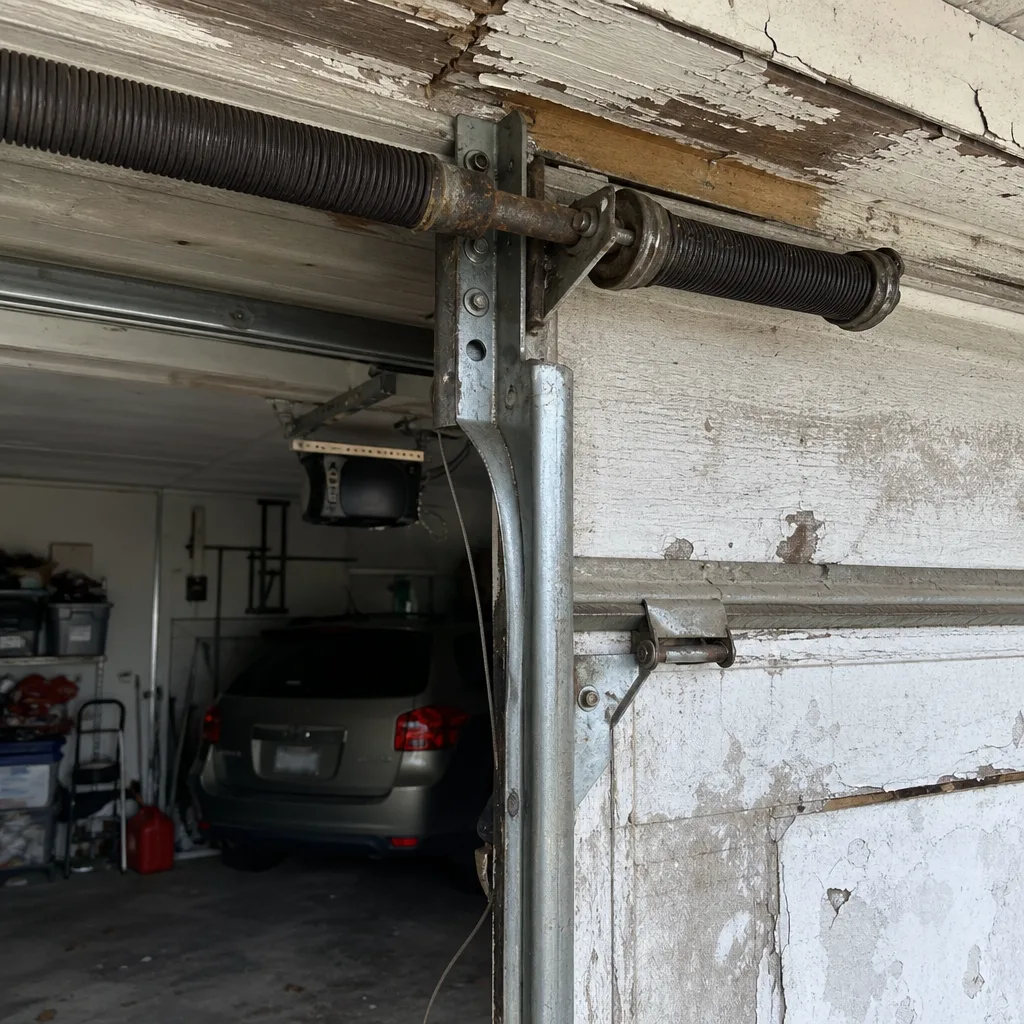 Before
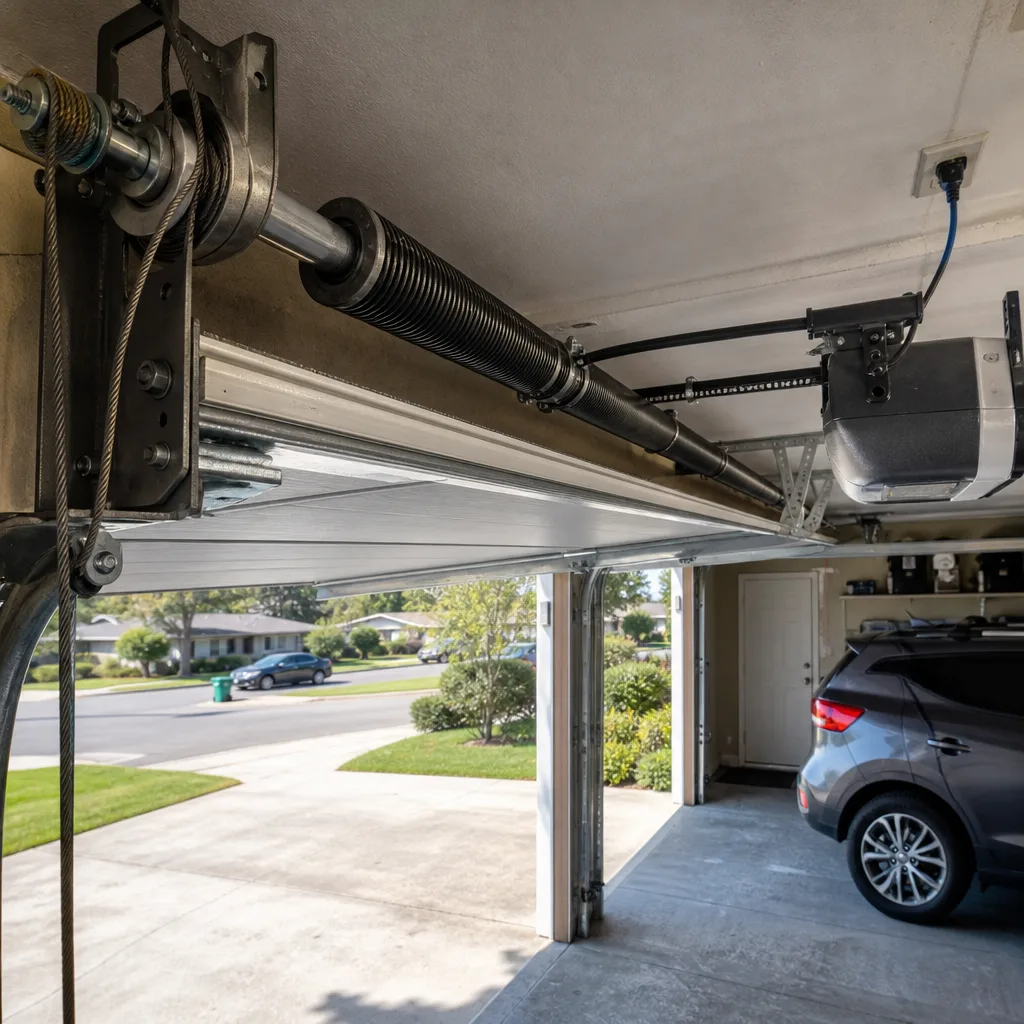 After
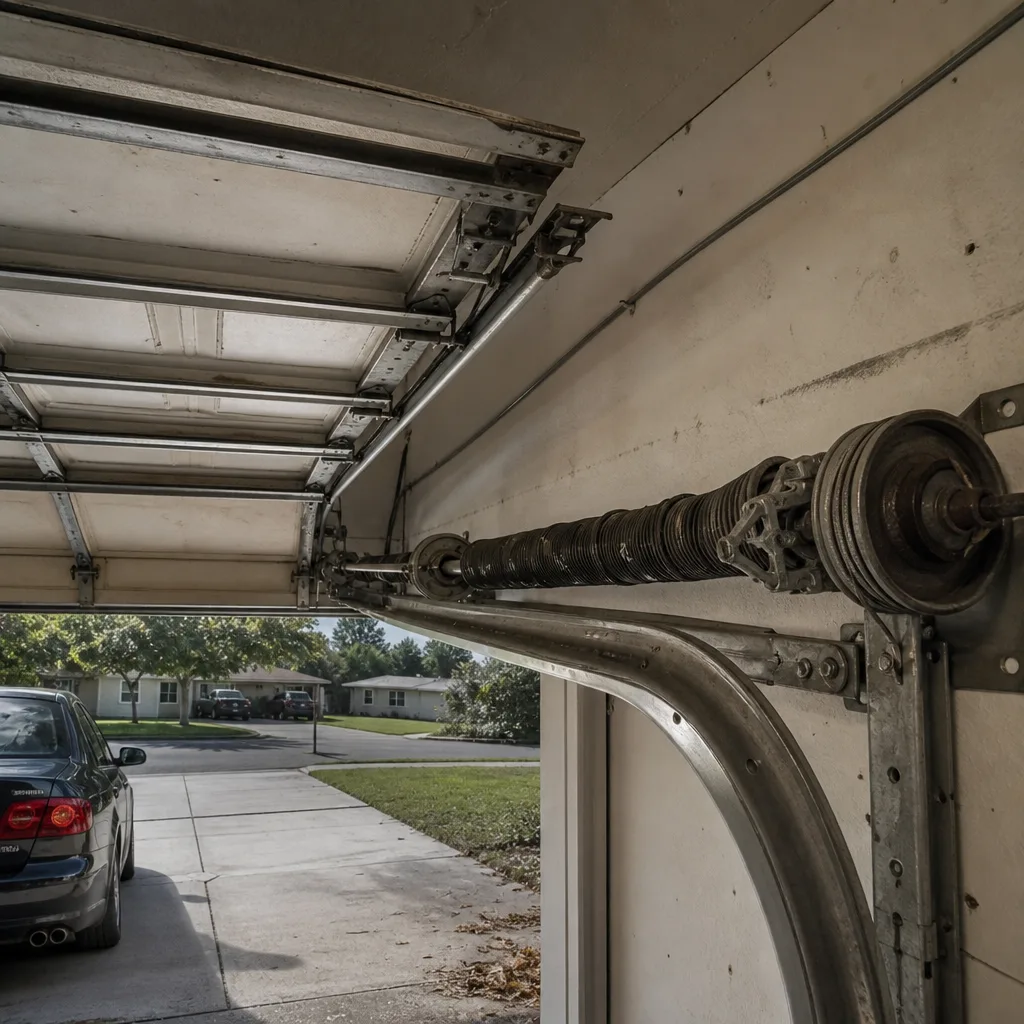 Before
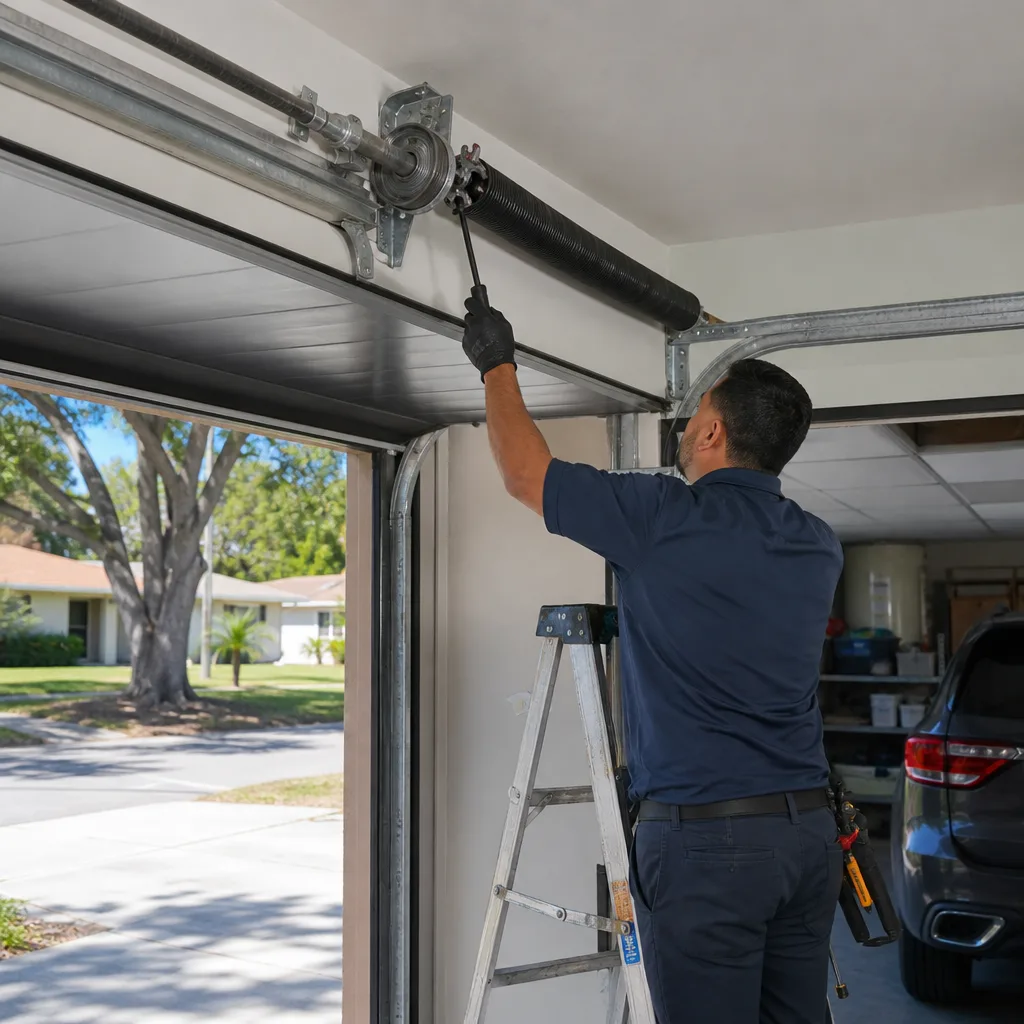 After
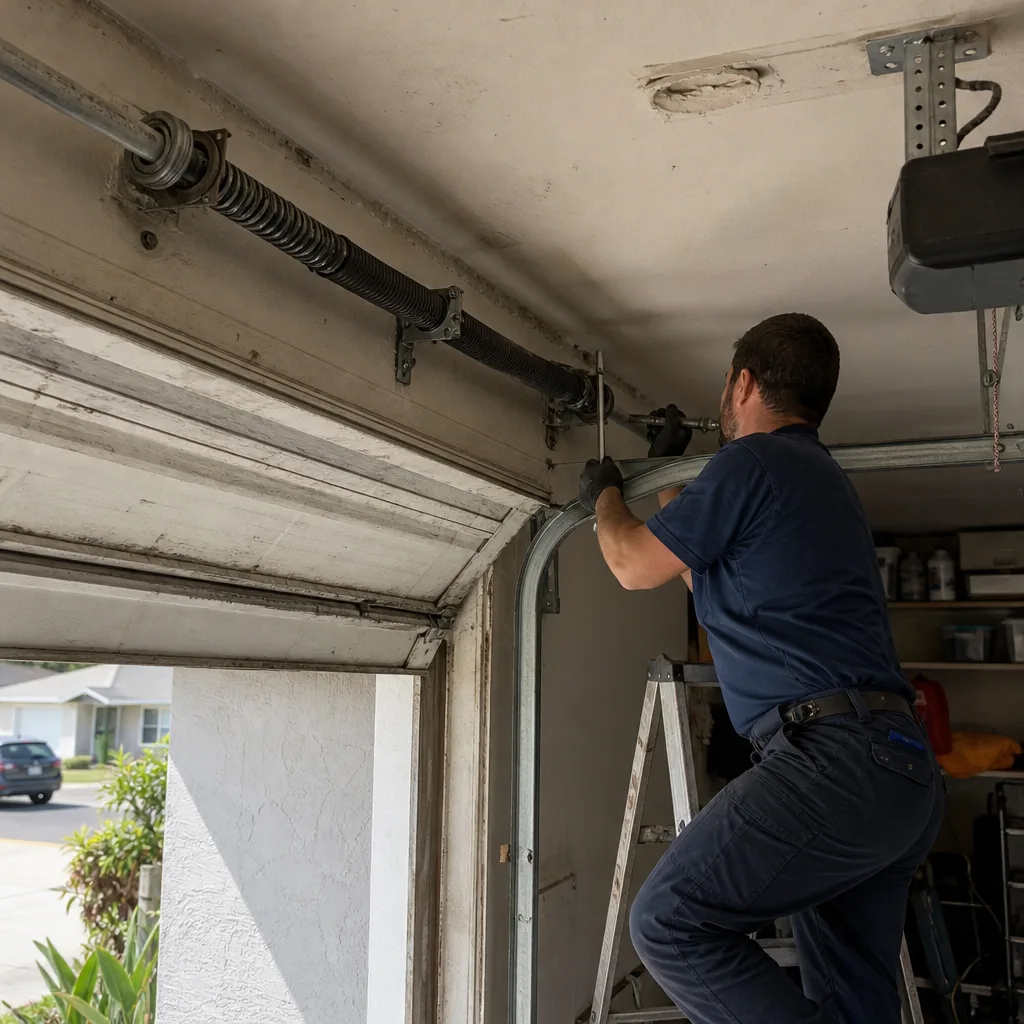 Before
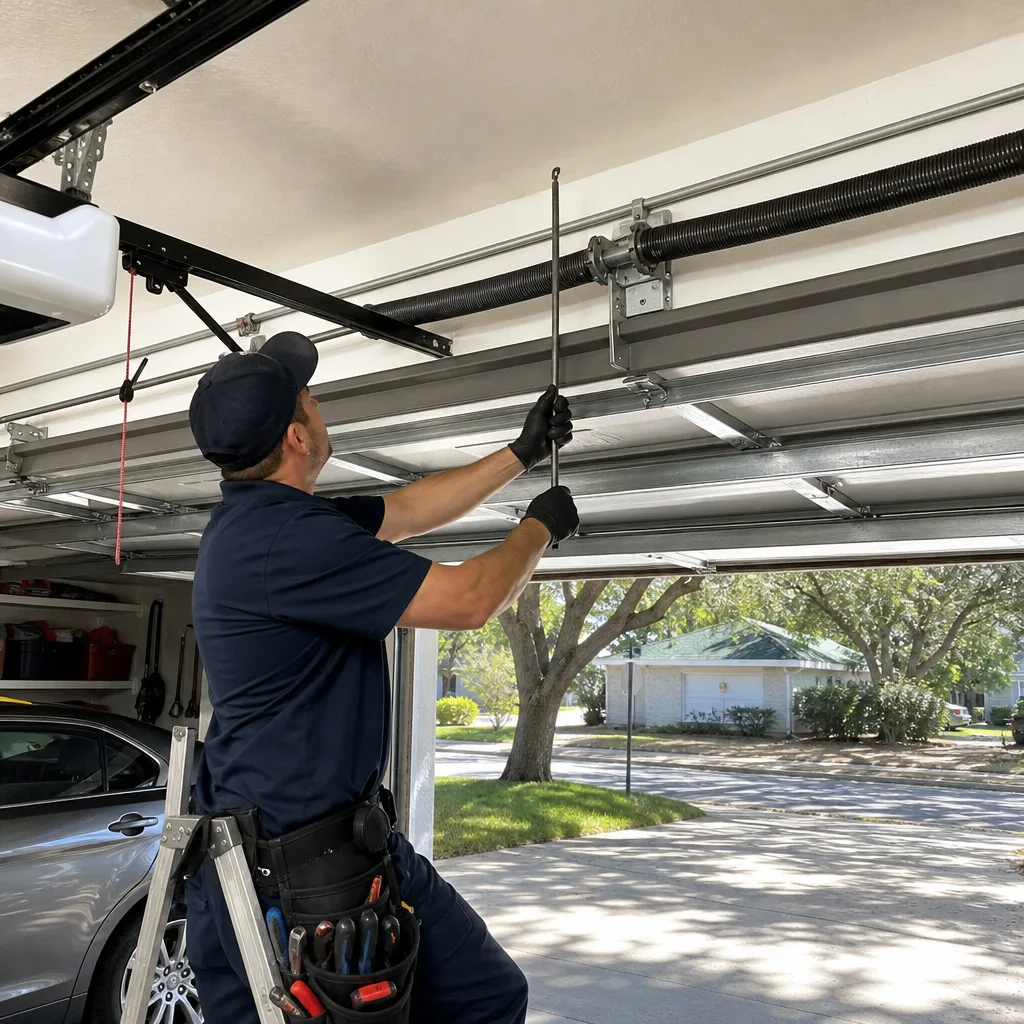 After