
Last updated October 30, 2026
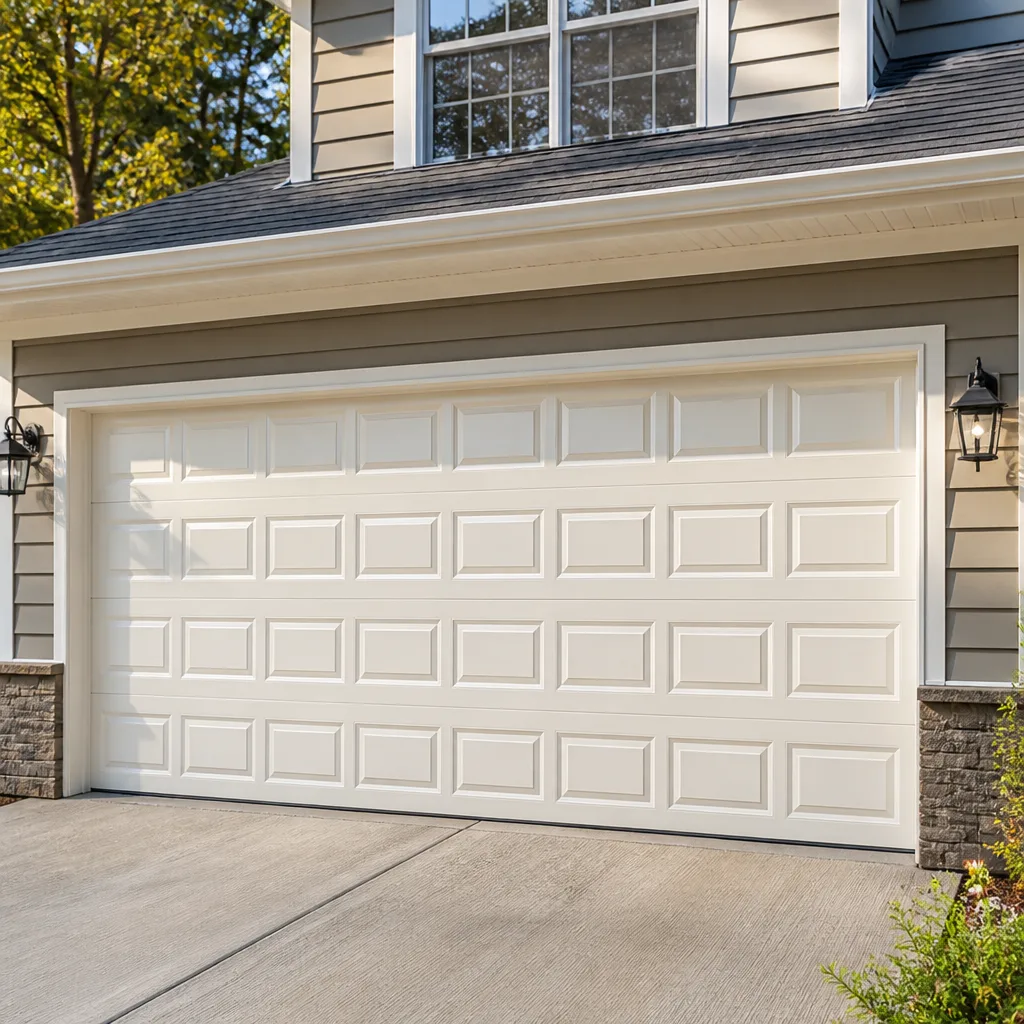 Raised-panel steel
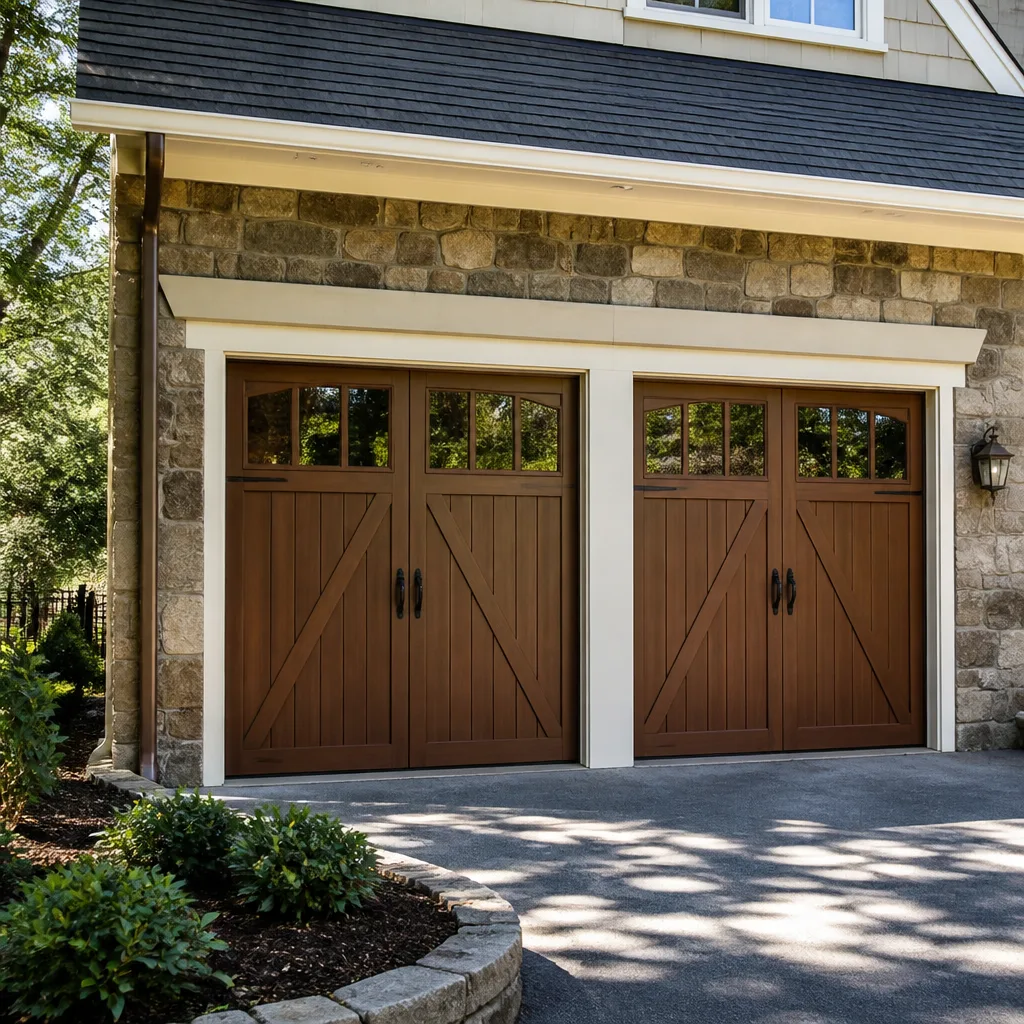 Carriage house
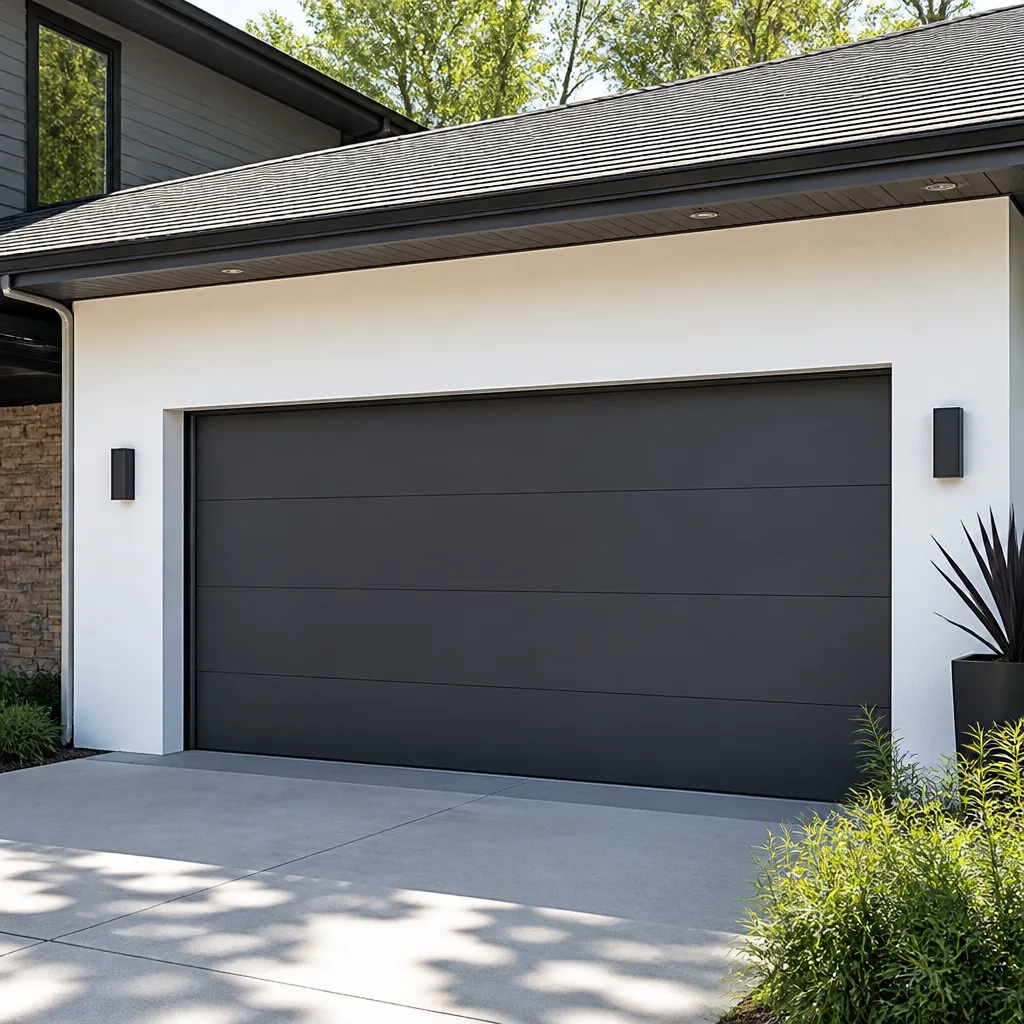 Modern flush
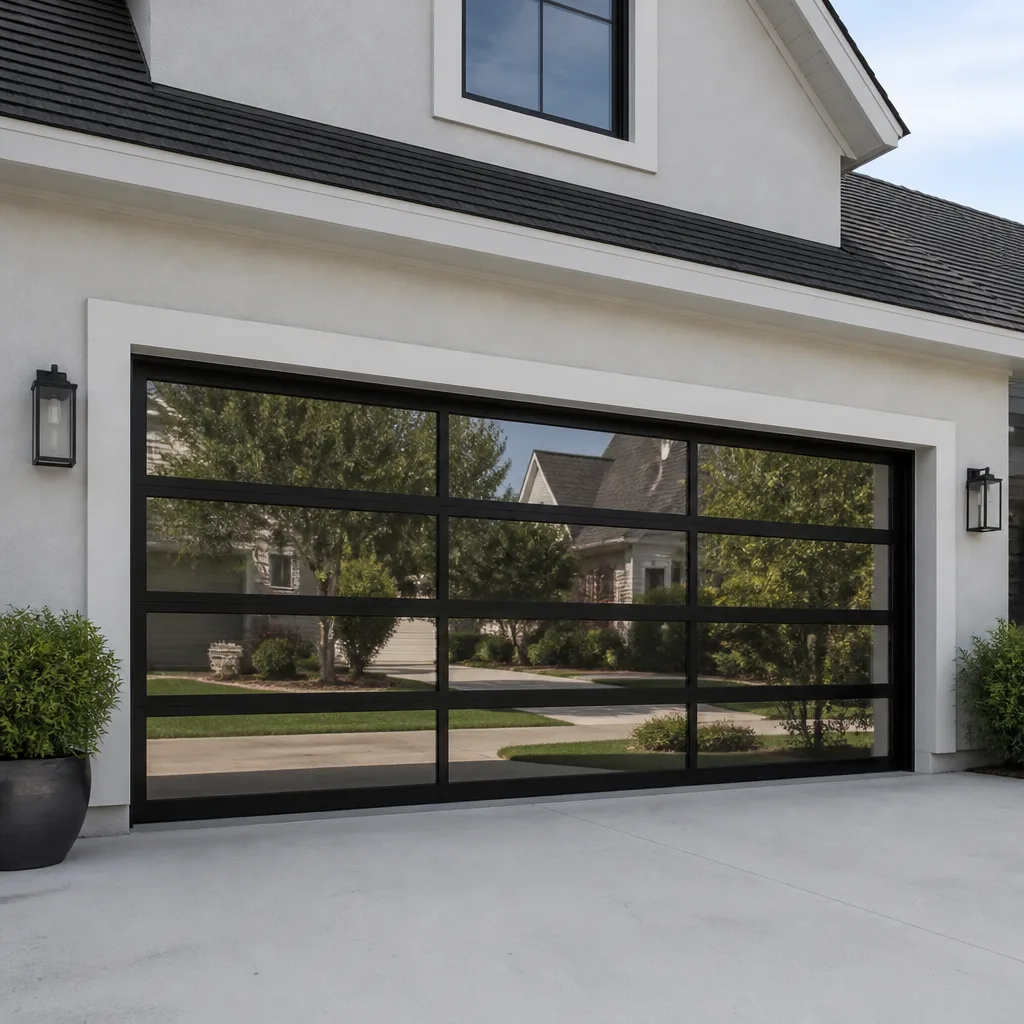 Full-view glass
 LiftMaster openers
 Chamberlain openers
Full 25-point door and opener safety check with every visit - springs, cables, rollers, tracks, and your LiftMaster or Chamberlain opener included
You get a price before we start. It does not change when the truck arrives.
Get your free estimateDIY vs Professional Garage Door: The St. Petersburg Homeowner’s Decision Guide
Roughly 20,000 Americans land in the ER every year from garage door injuries, and the vast majority of those incidents trace back to one component: the torsion spring. That spring sits above your door holding 150 to 250 pounds of torque, and it does not care how handy you are, how many YouTube videos you’ve watched, or how carefully you think you’re working. Meanwhile, a homeowner in St. Petersburg can swap a weatherseal or realign a photo-eye sensor in under half an hour with tools they already own. Most online guides either tell you to call a pro for everything or romanticize the DIY path without drawing a line, though you can find more guides & resources that strike a better balance. This guide draws that line precisely, task by task, with Florida-specific code and insurance realities factored in.
Quick Answer
Safe DIY garage door work in St. Petersburg includes weatherseal replacement, photo-eye sensor cleaning and realignment, keypad reprogramming, and cosmetic panel painting. Professional work is non-negotiable for torsion springs, lift cables, track realignment, and any repair involving a door that has come off its rollers, because these components are under extreme tension and a mistake can cause severe injury, property damage, or a wind-load compliance gap that affects your Florida homeowner’s insurance. If the task involves a red-painted component, a cable with visible fraying, or a door that binds mid-travel, call a technician with the right training and tools.
Styles & brands we work with
Table of Contents
- Where the Real Line Is: Injury Risk, Not Skill
- Safe DIY Tasks: What a Handy Homeowner Can Actually Do
- Professional-Only Work: Torsion Springs, Cables, and Track Work
- The Florida-Specific Reason: Wind-Load Compliance and Insurance
- The Real Cost of DIY Spring and Cable Work
- Tools and Skills for Legitimate DIY Tasks
- The Hybrid Approach: Supplying Parts, Hiring Labor
- Common Mistakes to Avoid
Where the Real Line Is: Injury Risk, Not Skill
The DIY-versus-professional question for garage doors is not about how capable you are with tools. A homeowner who has rebuilt a car engine or framed a shed absolutely has the mechanical aptitude to understand how a garage door works. What that homeowner does not have is the specific torque-loading tools, the spring winding bars rated for the exact diameter of the spring cone, and the thousands of repetitions that teach your hands what normal tension feels like versus dangerous tension. We’ve seen St. Petersburg homeowners who could out-build us on a carpentry project still misjudge the number of quarter-turns on a torsion spring, and a quarter-turn error on a 200-pound spring is not a minor calibration issue. It’s a missile.
The practical rule we use is simple. If the component you’re about to touch is powder-coated red, leave it alone. Red-painted hardware on a garage door system marks high-tension components: torsion springs, extension springs, and the cables that run alongside them. Those components are not red for branding. They’re red because manufacturers want you to know, visually and instantly, that this part can kill you if mishandled. That’s not drama, and it’s not a scare tactic. It’s the same reason electrical panels have warning stickers.
The green and yellow components, by contrast, are fair game for a careful homeowner. Weatherseals, photo-eye sensors, keypads, hinges that bolt on, and the door panels themselves all operate at no stored-energy risk when the door is in the down position and the opener is unplugged. Knowing which color zone you’re working in is the single most important decision criterion in this guide.
For St. Petersburg homeowners specifically, that heat and humidity add another variable. Salt air corrodes hardware faster than inland Florida, which means components wear unevenly. A spring that looks fine on the surface may have internal fatigue from years of coastal humidity cycling. We regularly see doors in Shore Acres and Snell Isle where the spring looks intact from the outside but sheared internally after a decade of salt-laden air. That’s the kind of failure mode a torque wrench can’t predict, and it’s exactly why spring work belongs with someone who has done it hundreds of times.
Safe DIY Tasks: What a Handy Homeowner Can Actually Do
Let’s be clear about what’s genuinely on the table. These tasks require no tension release, no torque-loading tools, and no risk of serious injury when done with basic precautions. Each one is also a task a professional would charge a minimum service fee for, so doing them yourself saves real money without real risk.
1. Weatherseal replacement. The rubber strip along the bottom of your door wears out in St. Petersburg’s heat within two to four years, especially on west-facing doors that get afternoon sun. The old seal slides out of its aluminum retainer channel, the new one slides in. You’ll need a pair of scissors, a flathead screwdriver, and about 20 minutes. The new seal costs between $15 and $40 depending on the door width.
2. Photo-eye sensor cleaning and realignment. If your door starts reversing for no reason and the sensor lights are blinking, the fix is usually a wiped lens or a knocked-out-of-alignment bracket. Clean both lenses with a dry cloth first. If the lights are still blinking, loosen the wing nut on the bracket, nudge the sensor until both lights go solid, and retighten. This is a five-minute job that prevents a $120 service call.
3. Keypad reprogramming. Every Chamberlain and Genie keypad has a learn button sequence that takes under a minute. The exact steps vary by model, but you’ll find them in your opener manual or printed under the light cover on the opener unit. If the keypad is more than 10 years old and corroded from St. Petersburg humidity, replacement units run $40 to $80 and pair in the same learn-button sequence.
4. Panel painting. Cosmetic panel repainting is a legitimate DIY weekend project on steel doors from Clopay and Amarr. Lightly sand, prime with a bonding primer, and use an exterior acrylic latex. The result won’t look factory-finished, but it extends the cosmetic life of an otherwise sound door by several years. Do not attempt to repaint a door that has rust-through or panel delamination; that’s a structural issue, not a paint issue.
5. Hinge lubrication and bolt tightening. Every six months, hit every hinge pin, roller stem, and the torsion spring itself with a lithium-based spray or a garage-door-specific lubricant. While you’re at it, check the bolts on the track brackets and the hinge plates. This is maintenance, not repair, and it’s the single best DIY task for extending the life of your door’s moving parts.
For everything above, you need household tools, not specialty garage door tools, and the door stays down the entire time you work. That floor-contact condition is your safety guarantee.
Professional-Only Work: Torsion Springs, Cables, and Track Work
The line we draw exists because the consequences on the wrong side are severe, permanent, and documented. Here’s what stays on the professional side, and why.
Torsion spring replacement. A standard residential torsion spring holds between 45 and 65 turns of torque energy when the door is closed. When it breaks, that energy releases instantly and loudly, which is why a broken spring sounds like a gunshot. Installing a new one requires winding it to the correct number of quarter-turns for your door’s specific weight and height. Too few turns and the opener strains and burns out. Too many turns and the spring can violently disengage from the cone during winding. The winding bars themselves must be the exact diameter the cone accepts; using a screwdriver or a piece of rebar is how fingers get broken and faces get lacerated.
Lift cable replacement. The lift cables travel alongside the door, and when a cable frays or snaps, the door loses its even lift balance. If the door is partially raised when a cable lets go, the panel section it was supporting can drop suddenly. Cable replacement also means re-tensioning the cable drum, which is mechanically linked to the spring system. You cannot safely replace a cable without first de-tensioning the spring, and if you’re de-tensioning the spring, you’re doing professional work by definition.
Track realignment. If your door binds mid-travel, squeals, or jumps a roller, the track has shifted, and correcting it means moving the vertical and horizontal track in precise relation to each other. A track that’s off by a quarter inch at the curve radius can cause the door to ladder, tear out its own roller stems, and crash. Track work also involves adjustment under a door that is no longer stable in its track, which means the door itself could fall while you’re under it.
Any repair where the door has come off its rollers. A door that has jumped a roller is not stable. It can weigh 150 to 400 pounds depending on construction, and it’s no longer supported evenly. Attempting to reset a roller without supporting the full panel weight is how fingers get crushed at the section joints and how panels get irreversibly bent.
For all of these, the relevant skill is not “knowing how garage doors work.” It’s having the specific winding bars, cable drum pullers, track jigs, and roller clamps that the job requires, plus the repetitions to know what correct tension feels like before the door is fully loaded. You can learn all the theory in a weekend. You cannot build that feel without doing it under supervision, on real doors, dozens of times.
The Florida-Specific Reason: Wind-Load Compliance and Insurance
Here’s the part most garage door guides never mention, and it’s the reason Florida is different from Nebraska or Ohio. In St. Petersburg, your garage door is a wind-load-rated component of your home’s building envelope. The 2023 Florida Building Code, which Pinellas County enforces, requires garage doors to be tested and labeled for wind-pressure resistance specific to the county’s wind zone. When a garage door is replaced or structurally repaired, that work falls under Garage Door Permits, Codes & Inspections in FL: What You Need to Know requirements that a homeowner cannot self-certify for structural changes.
What does that mean in practical terms? If you replace a torsion spring yourself and get the tension wrong, that’s a functional problem. But if you swap a door panel, alter the hardware, or re-mount the track without a wind-load assessment, you’ve potentially created a compliance gap on a component your insurer’s windstorm policy underwrote at the time of installation. When hurricane season comes and the adjuster is on your property after a storm, the question is not whether your door worked day to day. The question is whether the door, as modified, still meets the labeled wind-load rating the policy assumes.
We have heard from St. Petersburg homeowners who discovered this during the claims process, after the damage was already done. One homeowner in the Allendale neighborhood replaced his own panel section after a moving accident, used non-rated generic hardware, and thought he had saved $400. His insurer flagged the door during a post-storm inspection and reduced the payout accordingly. That’s not a hypothetical. It’s a documented pattern of how insurance claims work when structural modifications are undocumented.
The good news is that cosmetic and low-tension maintenance tasks, like weatherseal replacement and lubrication, do not affect wind-load compliance. The compliance-relevant work is the structural work: springs, cables, track, panels, and full door replacement. Coincidentally, that is the exact same list of items that belongs on the professional-only side for injury risk reasons. The safety line and the code line run in the same place.
The Real Cost of DIY Spring and Cable Work
Let’s run the actual numbers for a St. Petersburg homeowner who is seriously considering doing a torsion spring replacement themselves, because the economics matter.
The parts cost for a pair of torsion springs is between $60 and $120, depending on wire gauge and inner diameter. If you buy the wrong spring spec, which is common, you’ve spent that money twice or three times before the door operates smoothly. The winding bars are another $25 to $40. If you want a torque-limiting ratchet wrench, which is the safer way professionals actually do this work, that’s another $80 to $200.
Now the risk side. The CDC’s National Electronic Injury Surveillance System data consistently shows that garage door spring replacement attempts result in injuries requiring hospital treatment at a rate of roughly one per 36,000 doors in service. If you become one of those statistics in Pinellas County, a Level 2 or 3 emergency room visit for a hand or facial laceration or a crush injury starts around $1,500 to $4,000 with insurance, and multiple times that without it. Even a minor injury that doesn’t require the ER means a tetanus shot, a bruised hand, and a door that’s still broken.
Then there’s the follow-on cost when a DIY spring install goes functionally wrong. An improperly tensioned spring system will burn out a garage door opener motor within months. Chamberlain and LiftMaster openers are not cheap, and the replacement cost, including labor, typically runs $350 to $700. Replacing the parts you broke while trying to save money is the most expensive repair we see, and it happens more often than you’d think.
Professional spring replacement in St. Petersburg runs between $180 and $340 for a standard pair of torsion springs on a single-car door, and between $250 and $450 for a double-car or heavier door, including labor, parts, and tensioning, as detailed in our Garage Door Cost Breakdown: The St. Petersburg Homeowner’s Reference for 2026. The professional price is almost always lower than the worst-case DIY scenario, and it comes with a warranty on the spring and the work. When you factor in the ER risk profile and the wind-load implications above, the DIY route for springs doesn’t just fail the safety test. It fails the financial sanity test too.
Tools and Skills for Legitimate DIY Tasks
For the safe DIY jobs we listed earlier, the tool requirements are specific but modest. Here’s exactly what you need, and what happens when you substitute.
Weatherseal replacement: a pair of heavy scissors or tin snips, a flathead screwdriver, and a spray bottle of soapy water for lubrication when sliding the new seal into the retainer. What goes wrong with substitution: using a utility knife instead of scissors leaves rough cut ends that catch on the retainer track and tear, which means the new seal fails within months. The soapy water matters too; pushing a dry seal through a corroded aluminum retainer is how you kink and ruin a $40 seal in the first foot.
Photo-eye sensor alignment: a Phillips screwdriver and two minutes of patience. What goes wrong with substitution: using pliers to turn the wing nut strips the threads, and then you’re replacing the bracket too. Also, do not use a level app on your phone and expect it to align the sensors. The sensor beams need to be aligned to each other’s receiver lenses, not to gravity, and the manual method of watching the indicator lights is the only reliable visual check.
Keypad programming: a ladder if your opener is mounted high, and the opener’s manual or the sticker under the light cover. What goes wrong with substitution: guessing the learn-button sequence on a Genie when you’re familiar with a Chamberlain will lock out the keypad for several minutes, and the blinking lights will make you think the unit is broken. Read the manual. It takes 90 seconds.
Panel touch-up painting: a wire brush, a tack cloth, a bonding primer rated for galvanized steel, and an exterior acrylic latex topcoat. What goes wrong with substitution: using rustoleum directly on the panel without primer causes adhesion failure within a year in St. Petersburg humidity, and you’ll have peeling paint that’s worse than the scratches you started with. Also, never use an oil-based paint on a garage door panel; it doesn’t flex with the thermal expansion of the steel, and it cracks in the panel grooves within a season.
Lubrication: a lithium-based white grease spray or a silicone-based garage door lubricant, a step ladder, and a rag to wipe the excess. What goes wrong with substitution: using WD-40 or another penetrating oil is the most common garage door maintenance mistake. Penetrating oils wash out the existing lubricant and leave the roller bearings running dry, which accelerates wear. The right lubricant costs the same $8 and lasts for months.
If you have these tools and you’re comfortable using them, the safe DIY tasks on this guide are within your reach. If you’d rather not crawl under the door at all, that’s also a perfectly valid reason to call a pro, and we handle these jobs all the time for St. Petersburg homeowners who value the convenience. The Garage Door Repair in St. Petersburg page covers our repair service in detail.
The Hybrid Approach: Supplying Parts, Hiring Labor
There’s a middle path between full DIY and full professional service, and for some St. Petersburg homeowners it’s the right financial move. If you know exactly which parts your door needs and you’re confident in the compatibility after checking the model number, supplying the parts yourself and hiring labor-only work can save 15 to 30 percent on certain jobs.
This hybrid approach works best on two specific categories. First, opener replacement. If your Chamberlain or Genie opener has failed and you’ve already confirmed the model you want, purchasing it yourself and having a professional install it eliminates the parts markup. We install homeowner-supplied openers regularly, though we always recommend checking the rail length and drive type against your door’s height and weight first. A belt-drive opener on a heavy wooden door will wear out its belt in three years; that’s not a parts defect, it’s a mismatch.
Second, door section replacement. If you have a Clopay or Amarr door with a damaged bottom section, sometimes a matching section is available through the manufacturer. Supplying the section yourself and hiring labor for the installation can work, but there’s a critical caveat: the section must be from the exact same manufacturer, model line, and production year range. Garage door panel profiles change subtly between model years, and a mismatched section will not seat correctly against your existing weatherseal or interlock with the adjacent section. We’ve seen this go wrong when homeowners buy a “compatible” section from a surplus dealer and end up with a door that binds at the joint.
What does not work well as a hybrid: springs and cables. The parts are relatively cheap and the labor is the dangerous part, so supplying your own torsion springs and asking for labor-only installation saves almost nothing. We also won’t install springs we didn’t spec ourselves, because the warranty on the spring, the balance of the door, and the correct tension rating all depend on matching the spring to the door’s measured weight. A homeowner might know their door brand; they rarely know the exact wire gauge and spring ID the balance calculation requires.
If you want to explore the hybrid approach for an opener or a door section, call us first. We’ll tell you over the phone whether the part you’re considering will work before you spend the money. That’s free advice, and it’s better than discovering a compatibility problem after the part arrives. For homeowners thinking about a full door replacement rather than a section repair, our Garage Door Installation in St. Petersburg page walks through the process and options.
Common Mistakes to Avoid
- Treating all garage door work as equally dangerous. The opposite mistake from romanticizing DIY. Weatherseal replacement and sensor alignment are safe, straightforward tasks that any homeowner can do, and paying a $150 service fee for a five-minute sensor clean is money wasted.
- Using penetrating oil as a lubricant. WD-40 and similar products are solvents, not lubricants. They strip the bearing grease and leave the rollers dry, which accelerates wear and creates the grinding noise that sends people to Google in the first place.
- Watching a torsion spring replacement video and concluding it’s simple. The video is filmed by someone who has done it dozens or hundreds of times. The camera doesn’t show you the fine motor control, the feel of the winding bar, or the exact moment when the spring catches and you know to stop. What looks like a three-minute job on screen is the result of years of repetitions.
- Buying the wrong spring spec online. There are over 400 combinations of wire gauge, inside diameter, length, and winding direction for residential torsion springs. Buying by door brand alone is guesswork. The correct spec requires measuring the door weight and height, not reading a label.
- Ignoring a broken spring and continuing to use the opener. A door with one broken spring can still be lifted by the opener, but the opener motor is now doing double duty on one side of the shaft. This is how a $250 spring replacement becomes a $700 spring plus opener replacement. Unplug the opener and leave the door down until the spring is replaced.
- Assuming homeowners insurance covers DIY-related garage door damage. If a door falls or a spring snaps while you’re mid-DIY-repair, most policies treat that as an act of negligence and will deny the claim. Professional work carries the contractor’s liability coverage; your DIY work carries your own.
- Painting over a rusted panel without addressing the rust. St. Petersburg’s salt air means rust, and rust means structural compromise on a steel door. Paint over surface rust looks fine for six months, then the panel buckles. If the rust has pitted the steel, the panel needs replacement, not paint.
See the difference
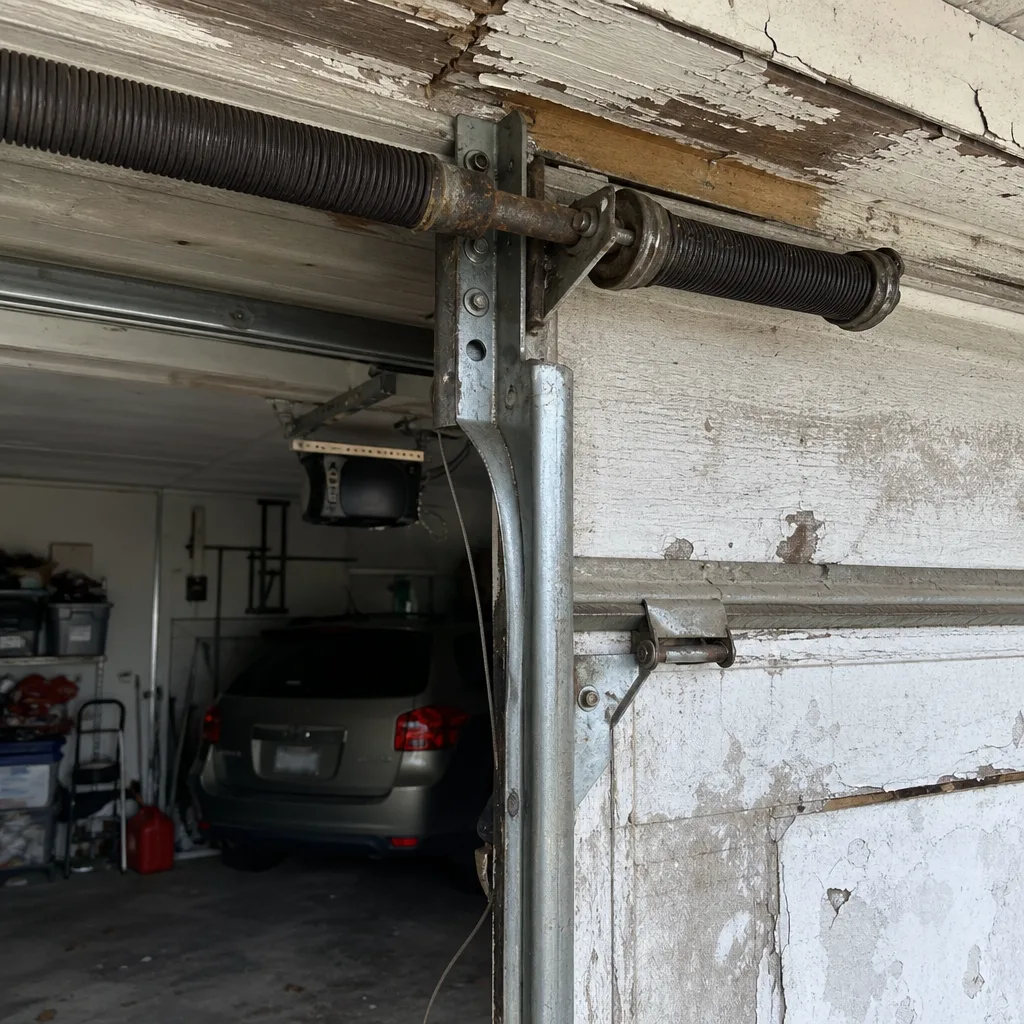 Before
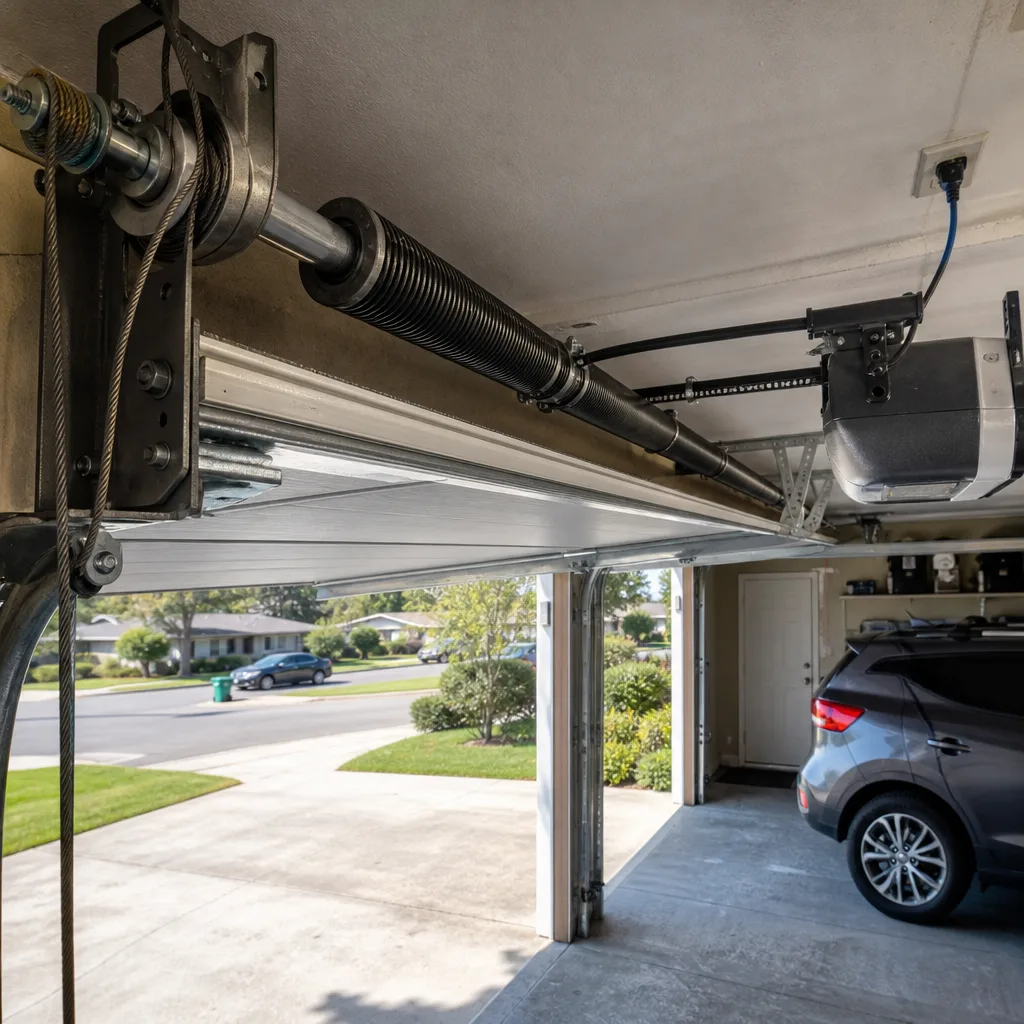 After
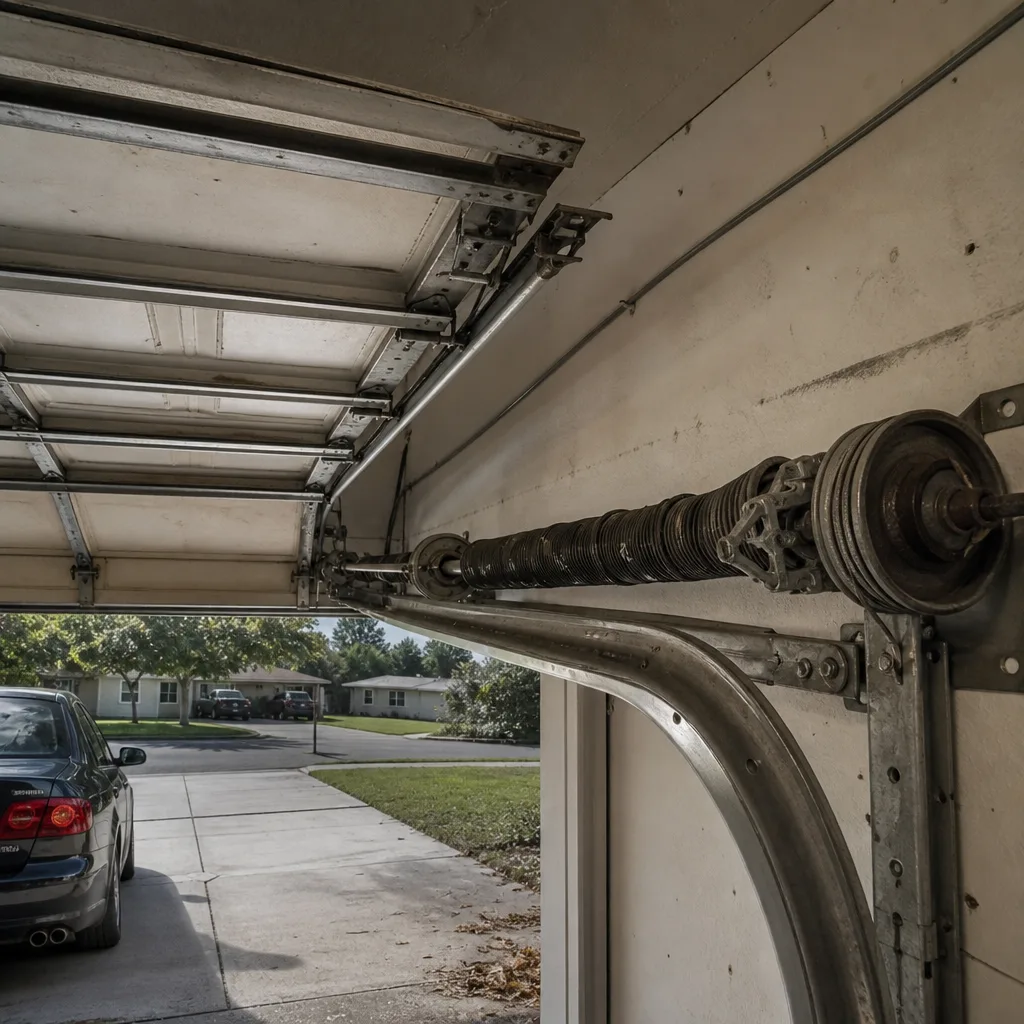 Before
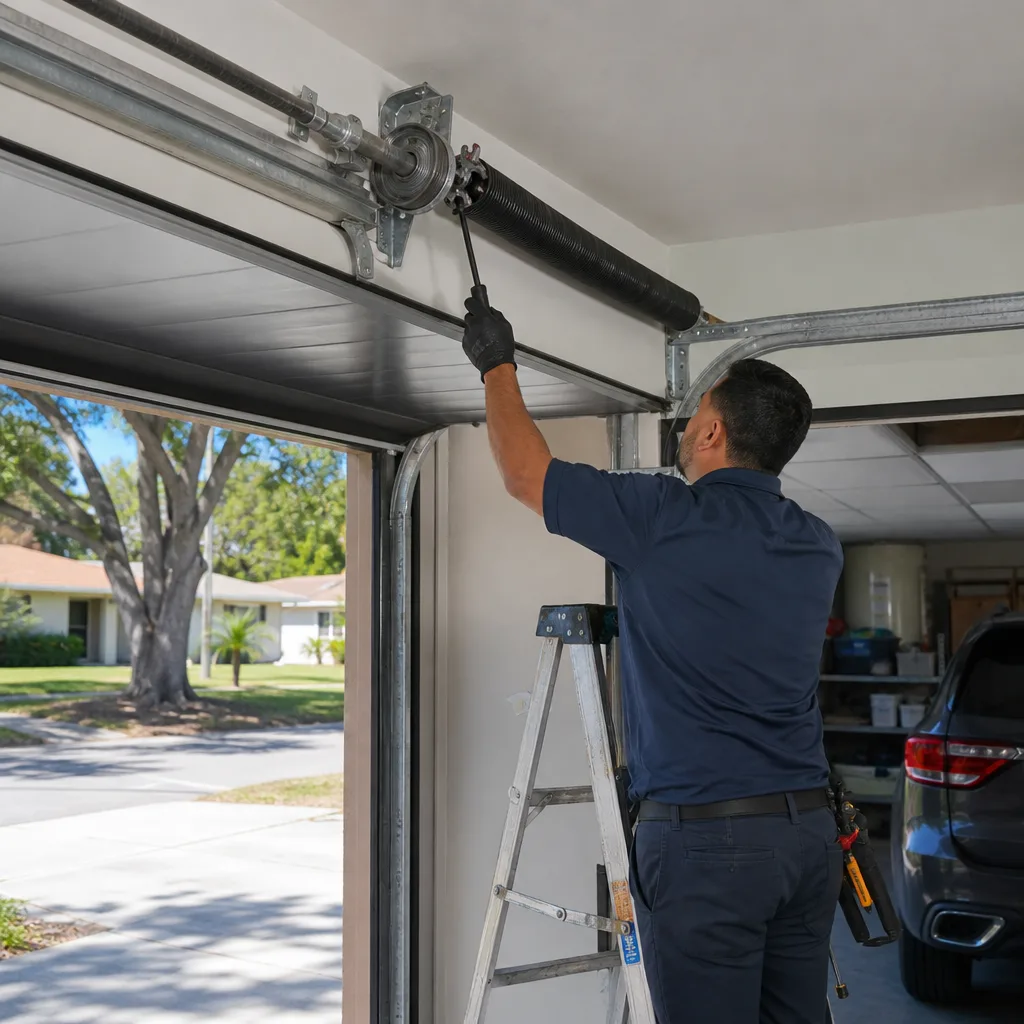 After
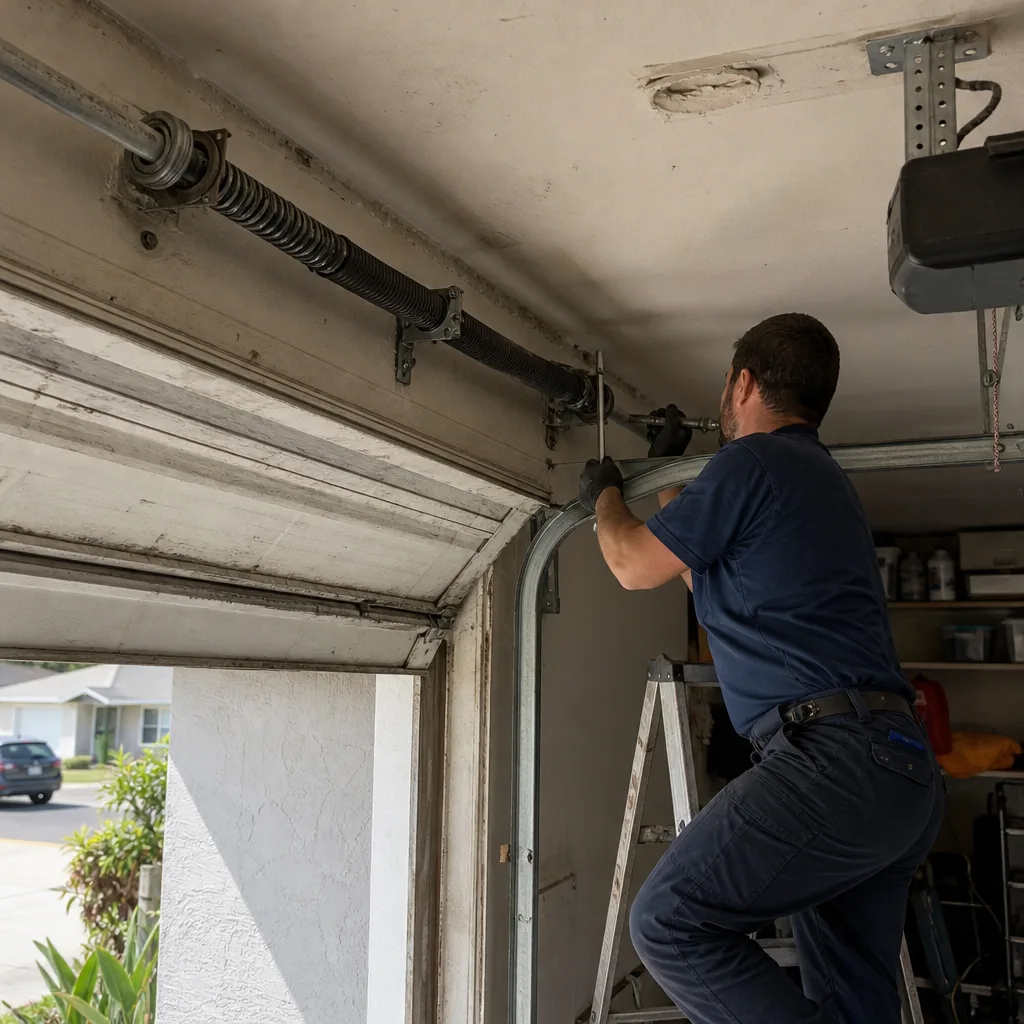 Before
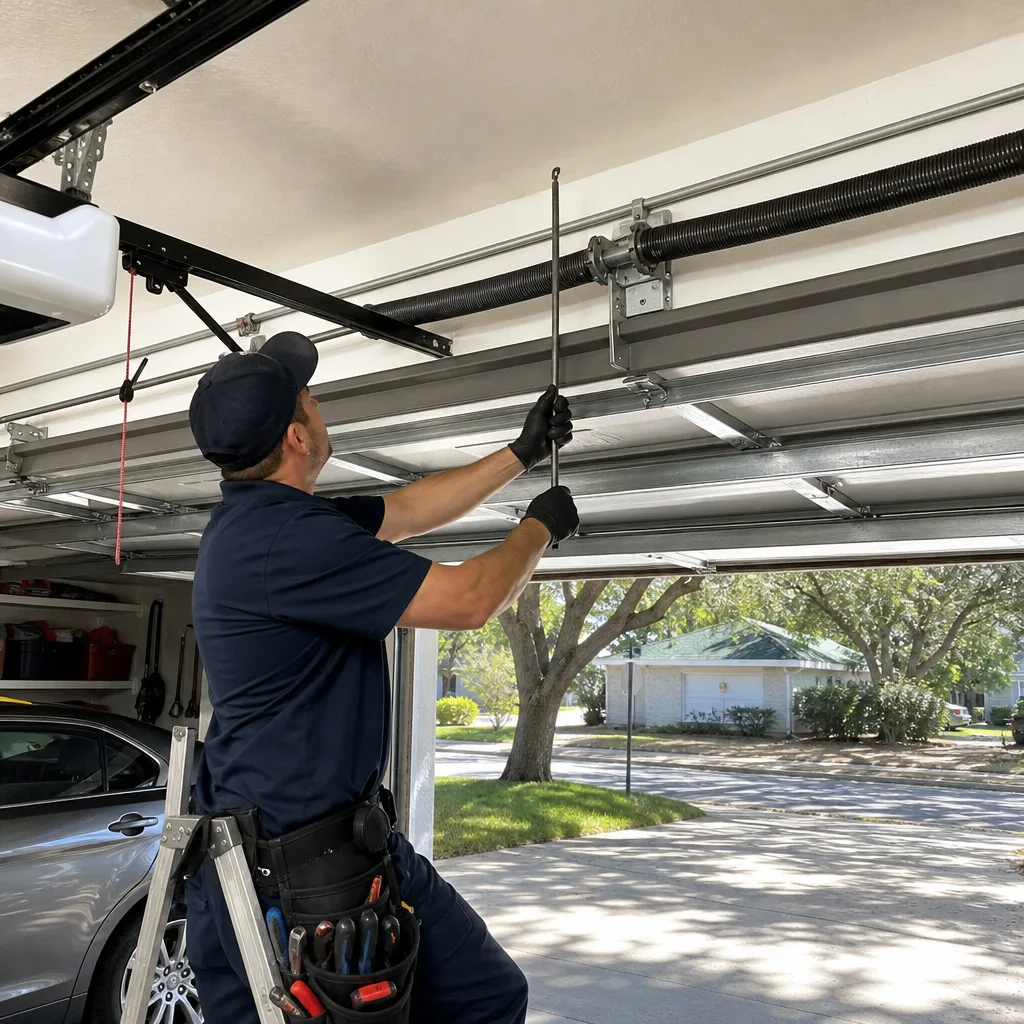 After
When to Call a Professional
Call a professional if you have a broken torsion spring, a frayed or snapped lift cable, a door that has jumped its track or come off a roller, a door that binds or grinds mid-travel, or any structural panel damage that affects how the door seals. Those are the conditions where the injury risk is real, the insurance implications are real, and the cost of a mistake exceeds the cost of the repair. You should also call if you’ve attempted a safe DIY task and the result isn’t working correctly; a door that reverses for no reason after you’ve cleaned and realigned the sensors may have a logic board issue, and a door that still leaks after a new weatherseal may have a warped bottom panel. St. Petersburg Garage Door Repair offers free estimates in St. Petersburg. Call (855) 473-1420 and we’ll tell you what you’re looking at before any work begins.
Frequently Asked Questions
No, torsion spring replacement is the single most dangerous residential repair task in any home, and it sits on our professional-only list. The spring is under hundreds of pounds of torque, requires specialty winding bars rated for the exact cone diameter, and an error in winding count can make the opener burn out or make the spring violently release. In St. Petersburg specifically, spring work also has wind-load compliance implications for your insurance when the repair must be documented. Call (855) 473-1420 for a spring replacement quote; the professional price includes the right spring spec, the right tension, and a warranty on the work.
Professional torsion spring replacement in St. Petersburg typically runs between $180 and $340 for a standard single-door spring pair, and between $250 and $450 for double or heavy doors, including parts, labor, and tensioning. The price is quoted and agreed before any work starts, so the number you hear on the phone is the number you pay at the end. Call (855) 473-1420 for an exact quote on your door.
Weatherseal replacement, photo-eye sensor cleaning and realignment, keypad reprogramming, hinge lubrication, bolt tightening, and cosmetic panel painting are the tasks a handy homeowner can handle safely. All of them are done with the door in the down position and no tension release required. If a task requires removing red-painted hardware or de-tensioning anything, that’s the line that separates safe DIY from professional work.
A general handyman can legally perform some garage door maintenance in Florida, but most handymen don’t carry the specific winding bars, cable pullers, and track tools the job requires, and many won’t take on torsion spring work because of the liability. What a handyman also can’t do is the brand-specific diagnosis. We’re certified to work on LiftMaster, Chamberlain, Genie, and Clopay systems, among others, which means we recognize your opener’s failure patterns instead of guessing. If your repair involves the opener’s logic board, the spring system, or the track alignment, call a garage door specialist, not a generalist.
No, the price we quote is the price agreed before work starts. If the technician finds additional issues during the repair, we stop and call you with the specifics and a revised quote before doing any additional work. There is no surprise invoice at the end, ever. Call (855) 473-1420 and describe your door, your symptoms, and your opener brand, and we’ll give you a firm number on the phone.
We’re factory-familiar with eight of the industry’s most widely owned residential brands: LiftMaster, Chamberlain, Genie, Clopay, Amarr, Wayne Dalton, Craftsman, and Raynor. That covers the vast majority of doors in St. Petersburg homes. When you call with a Chamberlain opener issue or a Clopay panel problem, we know the exact failure pattern and the right part before we arrive. No “we don’t service that brand” responses; your door is one we’ve seen before.
Most spring replacements in St. Petersburg are handled same-day or next-day, and we carry the common spring specs and cable lengths on the truck for faster turnaround. When you call, we’ll ask your door’s height, width, and material so we can bring the right parts the first time. For urgent spring and cable work, call (855) 473-1420 and we’ll give you a realistic arrival window based on where our techs are working that day.
Structural garage door repairs, including spring, cable, track, and panel work, must be done correctly to maintain the wind-load compliance your policy assumes. The work itself doesn’t trigger a premium change, but if it’s done improperly and the door fails during a storm, the insurance adjuster has grounds to reduce the payout. Professional repairs from a licensed garage door contractor document the work and keep your door within spec. Cosmetic and maintenance tasks like lubricating, cleaning sensors, and replacing weatherseal do not affect compliance.
The Bottom Line
The right answer to the DIY-versus-professional question depends entirely on which component you’re touching. Weatherseals, sensors, keypads, and lubrication are safe, straightforward homeowner tasks in St. Petersburg. Torsion springs, cables, track work, and off-roller doors belong with trained professionals who have the right tools and the repetitions to know when tension is correct, and Florida’s wind-load and insurance rules make the professional route the legally and financially sound one for structural work. If you’re ever unsure which side of the line a particular repair falls on, call us before you start. We’ll tell you honestly whether the job is safe for a capable homeowner or whether you should step away from the door. The phone call is free, and so is the advice. Our Garage Door Opener Repair in St. Petersburg service covers the most common complaint we see, and the team at St. Petersburg Garage Door Repair home handles every repair from a simple sensor clean to a full spring and track replacement.
Written by the team at St. Petersburg Garage Door Repair, serving St. Petersburg since 2011.