
Last updated October 30, 2026
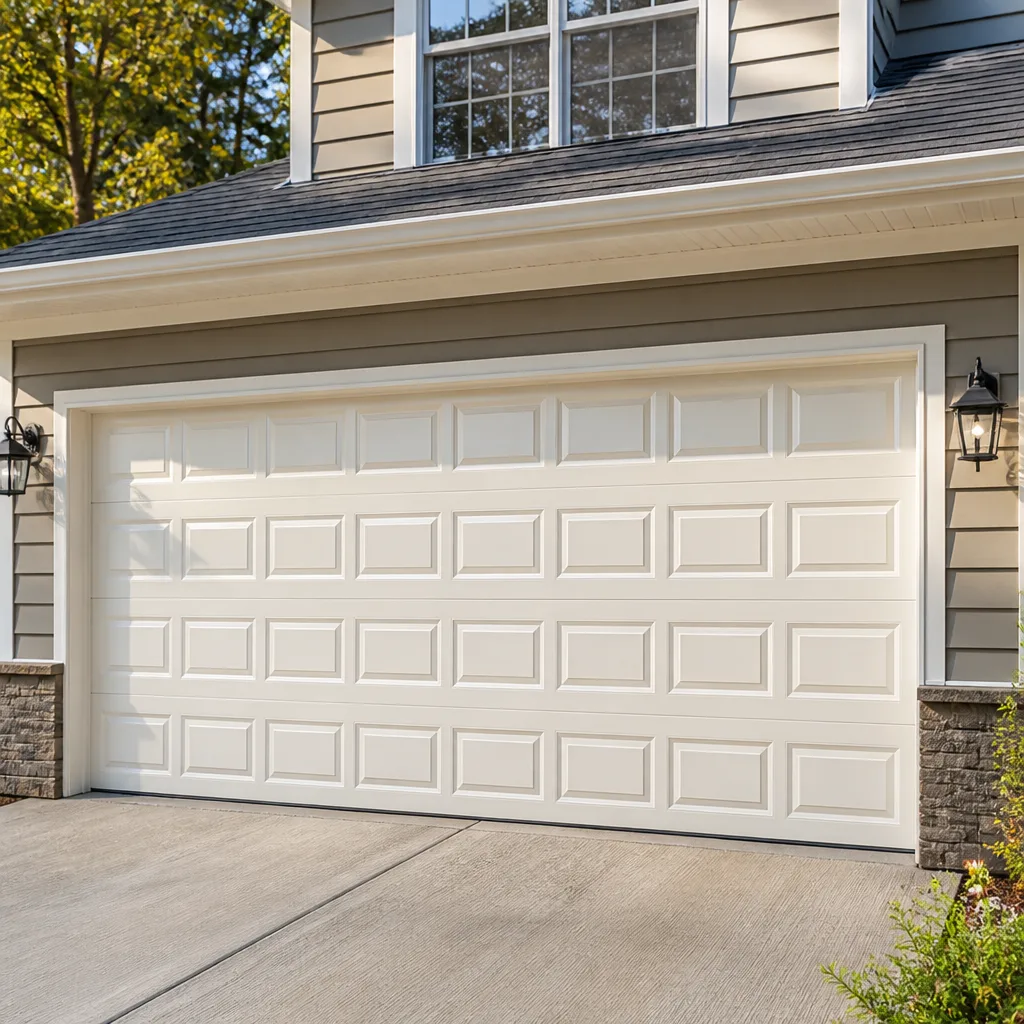 Raised-panel steel
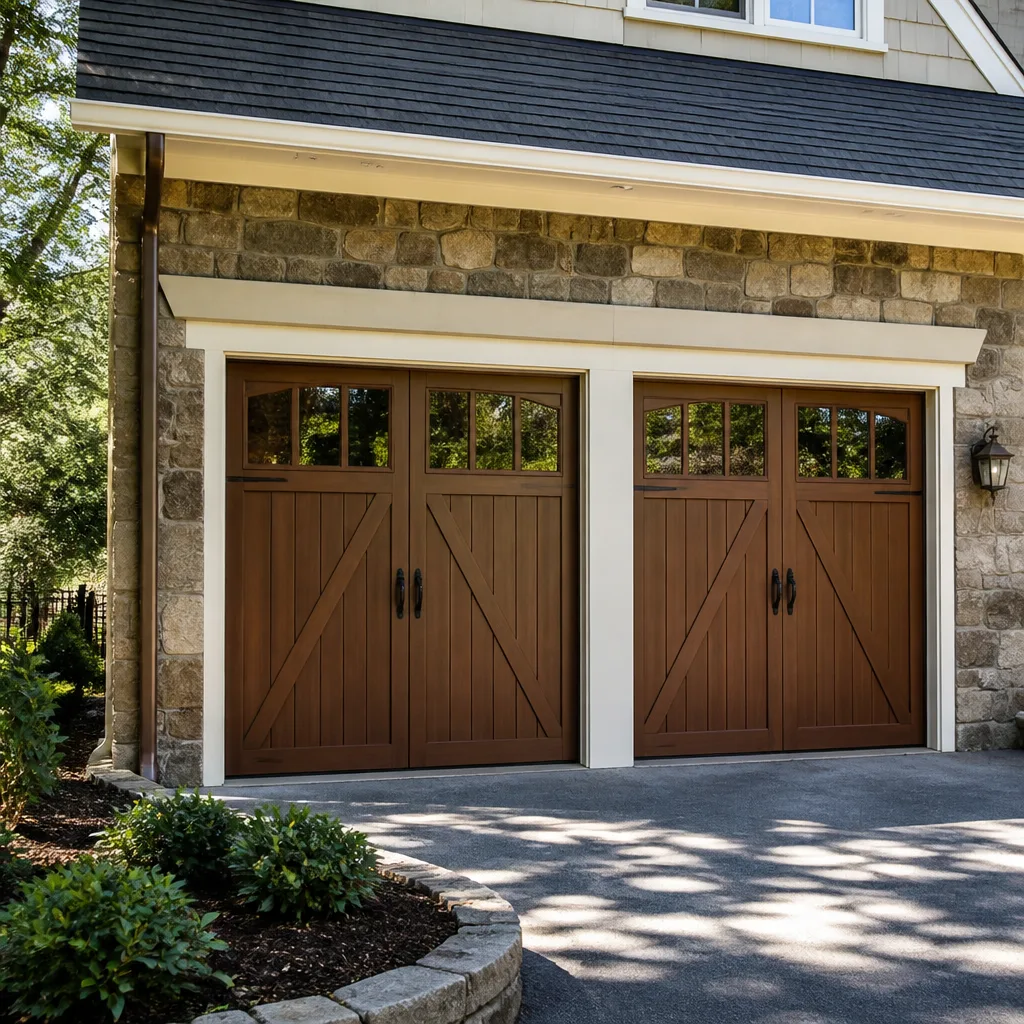 Carriage house
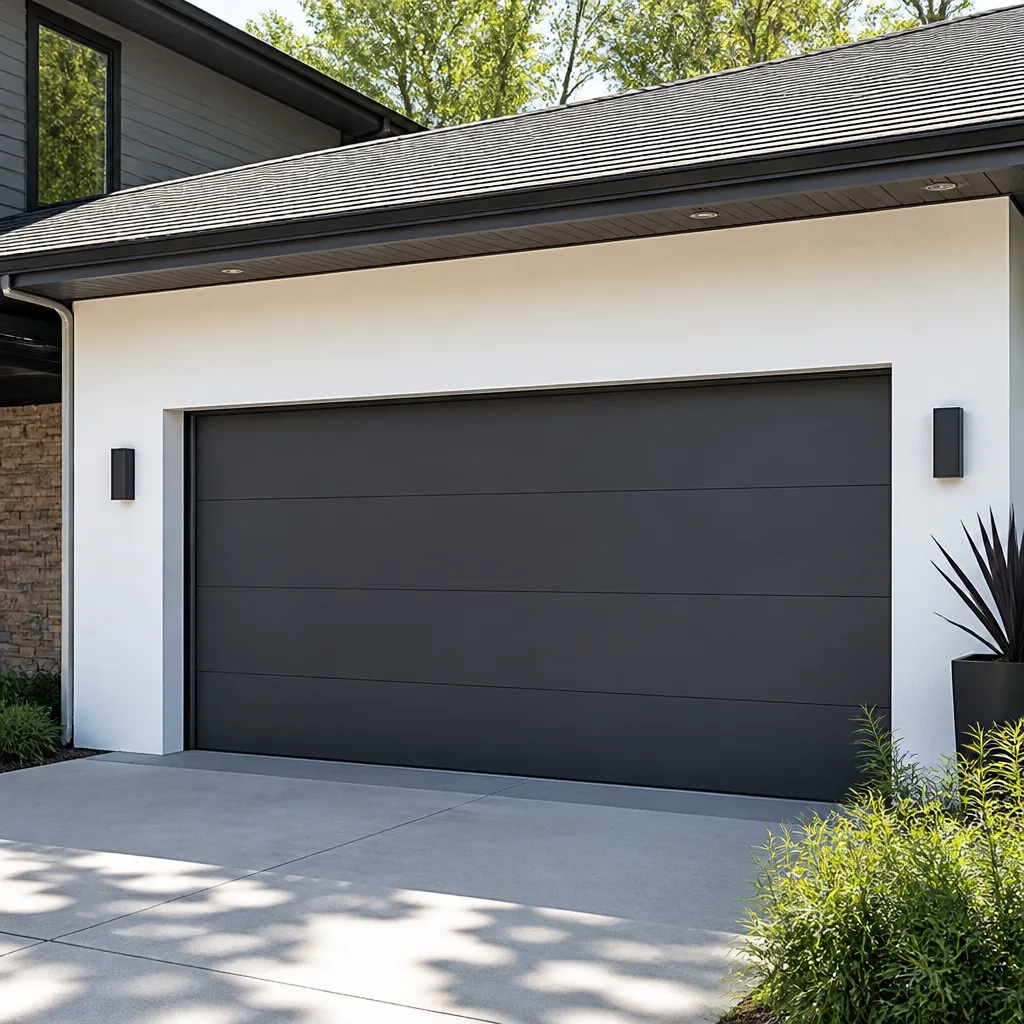 Modern flush
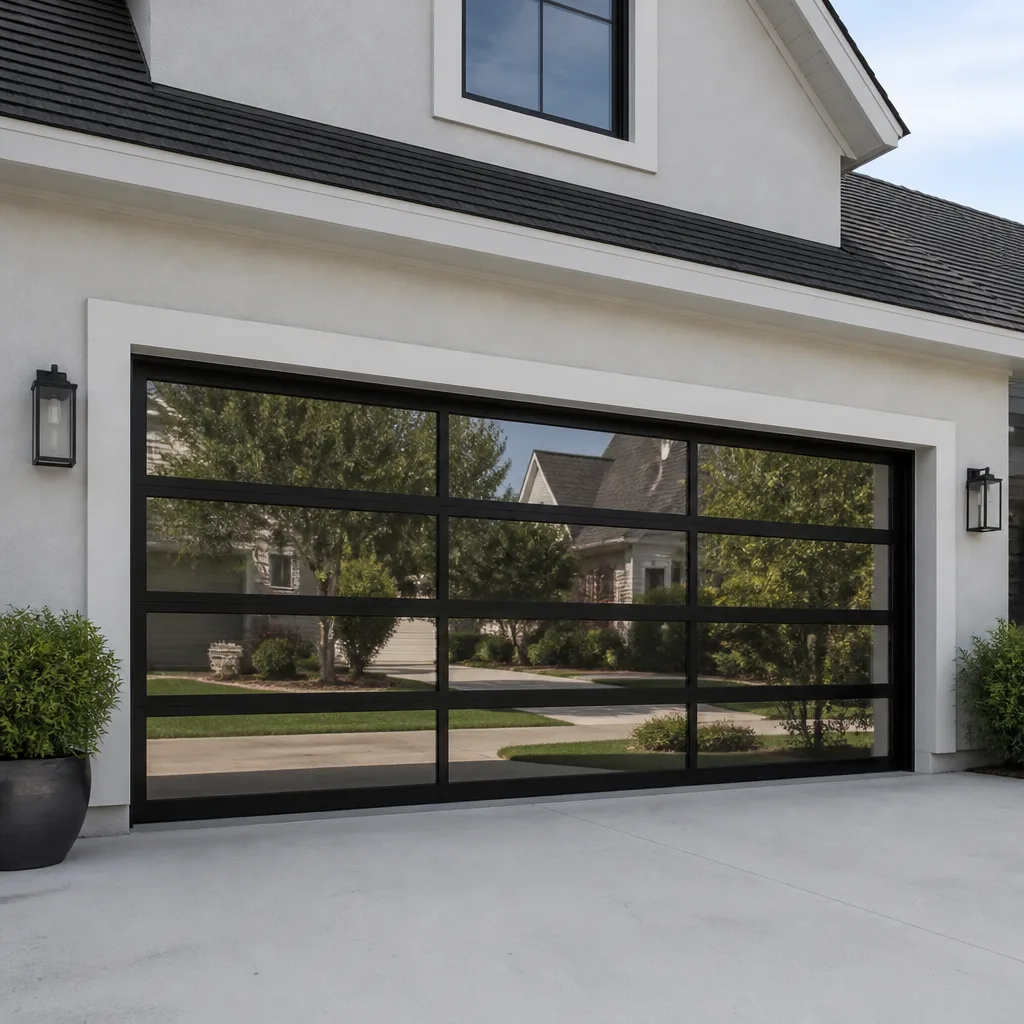 Full-view glass
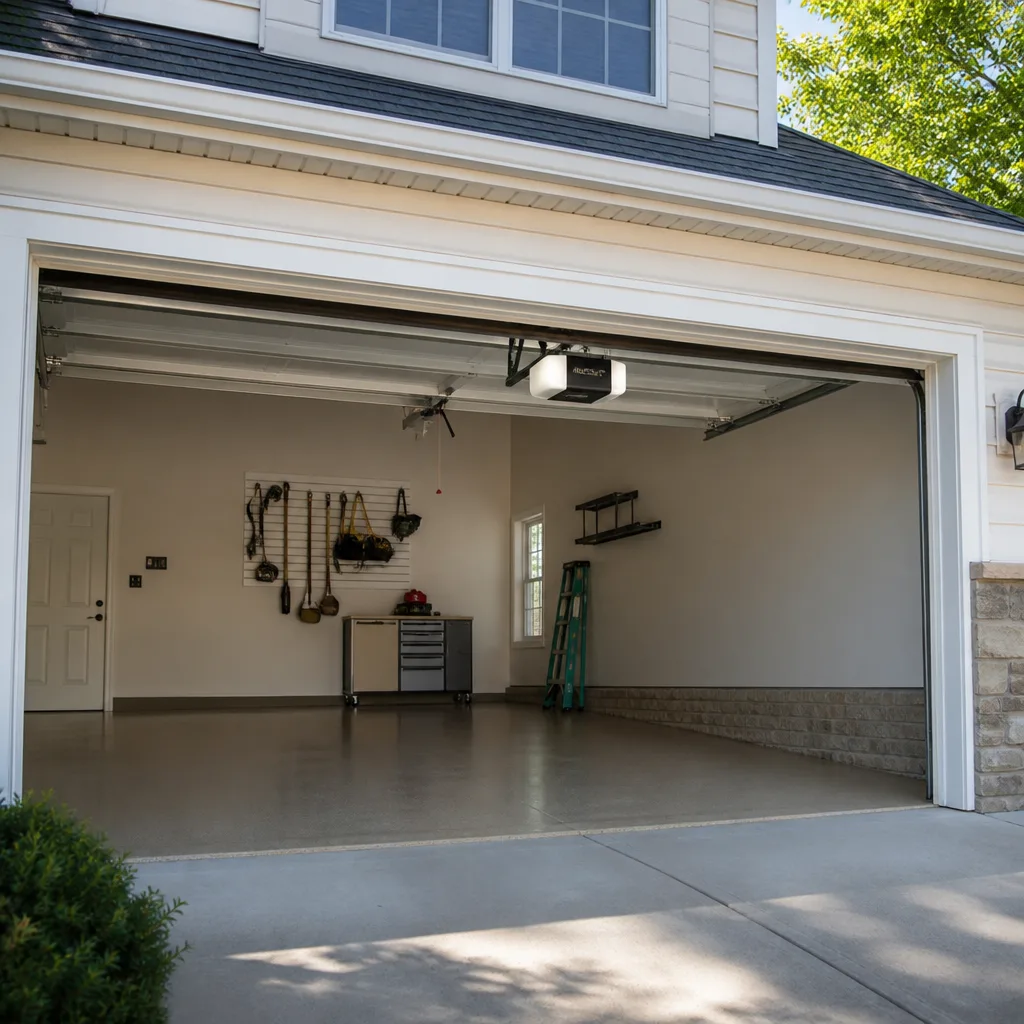 LiftMaster openers
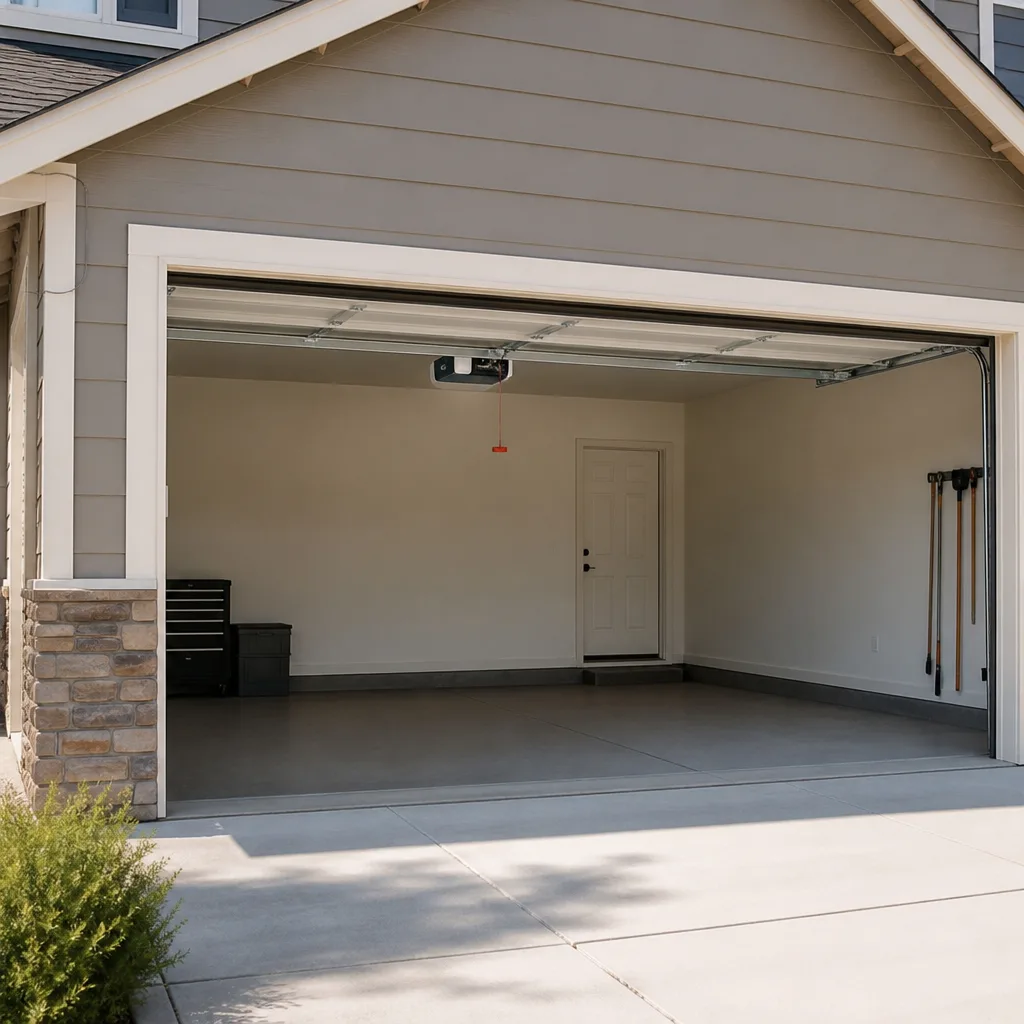 Chamberlain openers
Full 25-point door and opener safety check with every visit - springs, cables, rollers, tracks, and your LiftMaster or Chamberlain opener included
You get a price before we start. It does not change when the truck arrives.
Get your free estimateThe Complete Guide to Garage Door in St. Petersburg
Most garage door guides are written for a generic homeowner in a generic climate. St. Petersburg gets 240+ sunny days a year, sits inside a hurricane zone, and has salt air within miles of most neighborhoods. None of that is generic, and your garage door choices shouldn’t be either. A door that lasts 20 years in Chicago can look tired in six here if you pick the wrong materials, skip the wind bracing, or ignore how coastal humidity eats hardware. This guide walks through every decision a St. Petersburg homeowner faces, from first installation to a decade of upkeep, through the lens of salt, sun, and storm code, with cost breakdowns and 2026 pricing to help you budget ahead. You’ll learn what actually matters when choosing a door, what repairs cost before you need them, and how to read a quote like someone who knows the trade.
Quick Answer
A garage door in St. Petersburg is a salt-air-exposed, hurricane-rated mechanical system, not a simple convenience feature. The right door for this city is wind-load rated for Pinellas County code, built from corrosion-resistant materials like galvanized steel or aluminum, and serviced by a company that stocks parts for the major brands you actually own. Expect to pay more upfront than national averages for a code-compliant installation, but less per year in maintenance when you choose materials suited to the coastal climate.
Styles & brands we work with
Table of Contents
- What St. Petersburg’s Climate Does to Garage Doors
- Pinellas County Wind-Load Requirements Explained
- Steel vs. Aluminum vs. Fiberglass: A Coastal Cost Breakdown
- Which Door Brands Have Real Parts Support in St. Pete
- Garage Door Opener Problems Specific to Humid, Lightning-Prone Regions
- How to Read a St. Petersburg Garage Door Quote
- A 5-Year Maintenance Schedule for Coastal Florida Doors
What St. Petersburg’s Climate Does to Garage Doors
Salt air is the quiet killer of garage door hardware in St. Petersburg. Every neighborhood within a few miles of Tampa Bay or the Gulf, which is most of the city, gets consistent salt deposition on exposed metal. We’ve replaced track brackets and hinge assemblies in Snell Isle and Shore Acres where the galvanized coating was entirely gone after eight years, leaving soft, rusted steel beneath. The same parts in inland Florida often last twice that long. What surprises most homeowners is that the door panels themselves survive salt far better than the hardware holding them together. Springs, cables, hinges, and track brackets fail first.
Humidity is the second issue. St. Petersburg’s average relative humidity runs above 70% for most of the year. That moisture accelerates corrosion and also warps wood-frame doors faster than anything but direct rain exposure. UV intensity matters too. A dark-colored steel door in St. Pete absorbs enough solar heat that its surface temperature can exceed 150°F on a July afternoon. Dark paint fades faster here than in most of the country, and thermally induced panel bowing is common on cheaper doors. None of this is cause for alarm, but it does mean the material you choose has a larger effect on long-term cost in St. Petersburg than it does in most other U.S. cities.
Pinellas County Wind-Load Requirements Explained
Before you ever pick a style or color, building code narrows your options. Pinellas County sits in a high-velocity hurricane zone, which means every new garage door installation must meet specific wind-load requirements. The county follows the Florida Building Code, which references wind speed maps based on your exact location and the door’s exposure. In practice, most residential doors in St. Petersburg need to be rated for design wind pressures between 130 and 150 mph depending on whether the house sits in a standard or open exposure zone. Homes closer to the water face stricter requirements than homes inland near Tyrone or Disston Heights.
For homeowners weighing DIY versus professional installation, what this means is straightforward. You cannot legally install any door you buy off a shelf. The door must be tested and certified for the wind pressure your specific home requires. Most quality manufacturers produce wind-rated versions of their standard residential doors, including Amarr and Wayne Dalton models common in this market, but the installer must verify the specific product number matches your site requirements. Cheap doors without wind certification do exist online, and they get installed in Pinellas County by unlicensed operators. When a storm hits, those doors flex inward, pull their tracks off the wall, and let wind pressure enter the garage. That pressure blows out windows and lifts roofs. This is not a cosmetic code issue. A wind-rated door with proper reinforcement struts is the single most important structural upgrade you can make to a garage in St. Petersburg.
Steel vs. Aluminum vs. Fiberglass: A Coastal Cost Breakdown
Material choice drives both your upfront cost and your 10-year maintenance bill. Here is how each performs in St. Petersburg’s salt air, humidity, and UV load. If you want the full local detail, our Garage Door Installation in St. Petersburg page covers product selection and wind-load paperwork in depth.
Galvanized Steel
Galvanized steel remains the most common residential door material in St. Petersburg, and for good reason. A properly galvanized and factory-painted steel panel resists salt air reasonably well, holds up to wind loads better than aluminum, and costs less than fiberglass. The weak points are scratches and hardware. Any scratch that penetrates the galvanized layer will rust visibly within a season, especially within two miles of the bay. You need to touch up paint scratches annually or accept that the door will develop rust spots. We recommend steel for most St. Pete homeowners because it balances cost, wind strength, and service life when maintained.
Aluminum
Aluminum is the natural choice for coastal environments because it does not rust. It does, however, corrode through a different process called galvanic corrosion when it touches dissimilar metals without isolation. It also dents more easily than steel, which matters during hurricane season when debris flies. Aluminum doors cost 10 to 20 percent more than comparable steel doors in St. Petersburg, and their lighter weight makes wind-load compliance trickier. For a waterfront home on Snell Isle or Tierra Verde, aluminum with a marine-grade finish is often worth the premium. For a standard block of homes near Tyrone, steel is usually the better value.
Fiberglass
Fiberglass doors resist salt and humidity completely and never rust. Their weakness in St. Pete is UV. Years of intense sun exposure degrades the resin and causes fading, chalking, and eventually surface cracks. Fiberglass also costs the most upfront of the three common materials. We see fiberglass chosen most often by homeowners who want a wood-look door without the maintenance burden of actual wood, particularly on newer homes where the garage faces west and takes afternoon sun.
Realistic Cost Timeline
- Galvanized steel: $950 to $1,900 installed for a single door in St. Petersburg. Plan on power washing twice a year, annual scratch touch-up, and hardware replacement between years 7 and 10.
- Aluminum: $1,300 to $2,400 installed. Lower annual maintenance, but expect paint fade and occasional dent repair from storm debris.
- Fiberglass: $1,700 to $3,100 installed. Lowest corrosion maintenance, but highest risk of UV-related surface wear over a decade.
These are installed price ranges for standard residential single doors in Pinellas County as of 2025. The range reflects differences in insulation value, wind-load certification level, and hardware grade. The point is not the exact dollar figure but the pattern: steel costs less up front and more over time in a coastal environment. Aluminum and fiberglass cost more up front and less over time. Whatever you choose, the wind-load requirement in the previous section is non-negotiable and priced into all compliant installs.
Which Door Brands Have Real Parts Support in St. Pete
Seven in the morning is the wrong time to discover your door brand has no local parts support. When a spring breaks on a Tuesday before work, the only thing that matters is whether someone in Pinellas County has the right spring, hinge, or opener logic board on a shelf or can get it that afternoon. In our experience working across eight major brands, Amarr, Wayne Dalton, and Craftsman have some of the deepest parts availability in the St. Petersburg metro. That does not mean other brands are hard to service, but parts wait times vary by brand, and for the big three, we rarely wait more than a day for uncommon components.
Raynor doors occupy a middle ground. They are well-engineered and less common in St. Pete than Amarr or Wayne Dalton, which means some specialty components take an extra day or two to source. What matters most is that the repair company knows the brand before they arrive. A technician who diagnoses by symptom and mechanism, rather than by brand loyalty, can usually find a compatible part quickly. But when a proprietary panel hinge or a specific opener carriage fails, brand familiarity is the difference between a same-day repair and a callback next week. Our Garage Door Repair in St. Petersburg page details how we approach brand-specific diagnosis for the eight most common residential lines in this market.
Garage Door Opener Problems Specific to Humid, Lightning-Prone Regions
St. Petersburg sees more lightning strikes per square mile than almost anywhere else in the United States. That is not a local legend. The Tampa Bay area is the lightning capital of North America by most measures, and garage door openers are particularly vulnerable. A nearby strike does not need to hit your house to damage an opener. Voltage surges travel through the electrical grid and fry the logic boards inside LiftMaster, Chamberlain, and Genie units with equal enthusiasm. When a St. Pete homeowner calls us after a thunderstorm and says the opener stopped working but the outlet still has power, a surge-damaged circuit board is the culprit more often than not.
Humidity also plays a role in opener longevity. Garage door openers are not sealed against moisture. In a humid garage, condensation builds on internal components, accelerates corrosion on connectors, and shortens the life of the unit’s capacitor. We recommend keeping the garage ventilated or conditioned if possible, but practically, most St. Pete garages are humid, and openers last 8 to 12 years instead of the 15 you might see in drier climates. When an opener does fail, the repair is rarely about the motor. It is almost always the logic board, the capacitor, the gears, or the safety sensors. Our team diagnoses at that component level, which means we tell you the problem and what the fix costs before we install anything. Garage Door Opener Repair in St. Petersburg covers how we approach opener diagnosis in detail. Your opener deserves a diagnosis, not just a symptom.
How to Read a St. Petersburg Garage Door Quote
Quotes in this market range from deceptively simple to genuinely helpful. The difference often comes down to what is not written down. Here is a step-by-step way to read any garage door quote you receive in St. Petersburg.
- Look for the wind-load statement. The quote should state the design wind pressure for your home and confirm the door model meets it. If a quote is suspiciously cheap and mentions nothing about wind rating, that is a red flag. A non-compliant installation can fail an inspection and need to be redone entirely.
- Confirm the hardware spec. Hinges, rollers, track brackets, and fasteners should be called out as corrosion-resistant. In St. Petersburg, plain steel hardware is a false economy. Ask specifically for galvanized or stainless components.
- Check the weatherseal grade. The bottom seal and perimeter weatherstripping matter more in coastal Florida than most places. A good quote specifies marine-grade or UV-stabilized seals. A cheap quote often leaves the seal type unspecified, and you end up replacing it in two years.
- Verify opener compatibility. If you are replacing the door, the quote should address whether your existing opener will work with the new door’s weight and balance. Door weight varies by material and insulation. An installer who does not ask about your opener is not thinking about the system.
- Ask about hurricane bracing line items. Wind-rated doors often require reinforcement struts that are listed as separate line items. Make sure they are included, not assumed.
After you buy, the maintenance burden shifts. Here is what a realistic five-year schedule looks like for a St. Petersburg door.
A 5-Year Maintenance Schedule for Coastal Florida Doors
This schedule assumes a galvanized steel door, the most common material in St. Pete. Aluminum and fiberglass doors skip the rust check but still need hardware inspection and lubrication. Follow this and you will catch most problems before they become breakdowns.
Year 1: Inspect all hardware for rust spots, especially near the coast. Touch up any panel scratches immediately. Test the auto-reverse safety feature on the opener once a month. Lubricate rollers, hinges, and springs with a silicone-based lubricant every six months.
Year 2: Replace the bottom weatherseal if it shows cracks or flattened sections. Check track alignment. Clean the photo-eye sensors with a dry cloth. Inspect cables for rust or fraying at the bottom bracket.
Year 3: This is when many original torsion springs in St. Pete reach the end of their service life. Springs have a cycle rating, typically 10,000 cycles for standard springs, and three years of heavy daily use can exhaust it. Have the spring cycle count checked and budget for replacement.
Year 4: Inspect the door balance by disconnecting the opener and lifting the door manually. It should stay in place at the halfway point. A door that falls or rises on its own needs spring adjustment. Repaint any exterior rust spots with a rust-inhibiting primer and factory-matched paint.
Year 5: Full hardware evaluation. Hinges, brackets, and fasteners that have survived five years of salt air are often nearing replacement even if they look passable. Replace them proactively before a bracket fails and drops the door. The same goes for the opener’s safety sensors and capacitor.
This schedule is general, and your mileage will vary by neighborhood. Homes within a mile of the bay in Old Northeast or Snell Isle will see faster hardware wear than homes near Tyrone or Kenneth City. When in doubt, a visual inspection by someone who knows what salt damage looks like takes 30 minutes and costs less than a broken spring at 7 a.m.
Common Mistakes to Avoid
- Choosing a door by looks before wind rating. St. Petersburg building code cares about wind resistance before style. Pick the wrong door and you either fail inspection or pay for a structural upgrade later.
- Ignoring hardware grade to save money. Plain steel hinges and brackets on a coastal home will rust out years before the panels do. Paying slightly more for galvanized or stainless hardware is the single best long-term value decision you can make.
- Buying an opener without surge protection. In the lightning capital of North America, a plug-in surge protector costs under $50 and can save a $300 logic board. Every local homeowner should have one on their garage circuit.
- Waiting to replace a noisy roller. A grinding roller is a symptom, not a quirk. The longer you wait, the more likely it destroys the track, which turns a $30 repair into a $200 one.
- Skipping regular spring inspection. Torsion springs in St. Pete fail more often than service calendars suggest because salt air weakens the steel. An annual inspection is cheap insurance.
- Using the wrong lubricant. WD-40 is not a garage door lubricant. Use a silicone-based lubricant on moving parts and avoid petroleum-based sprays that gum up in humidity.
- Assuming every quote includes the same scope. Wind bracing, weatherseals, and hardware grades are the silent variables. A lower quote often just includes less.
See the difference
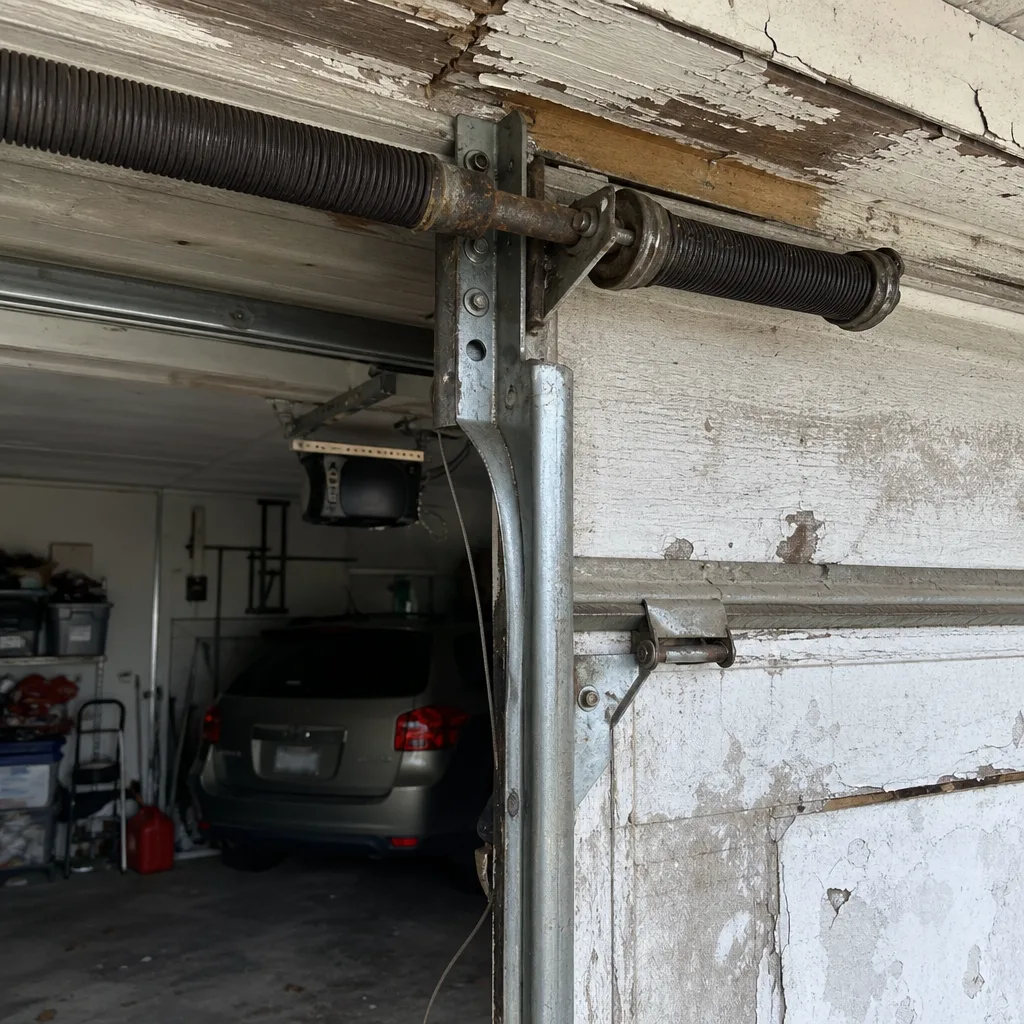 Before
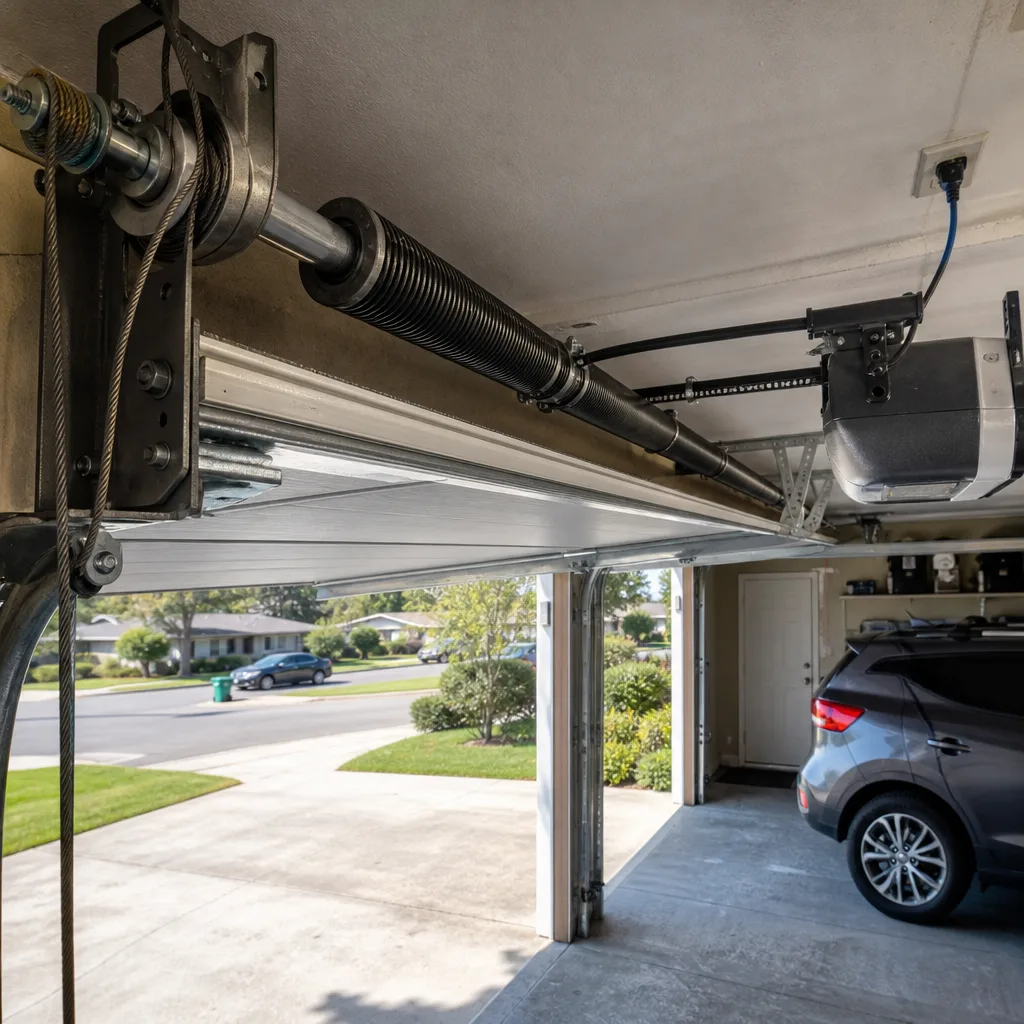 After
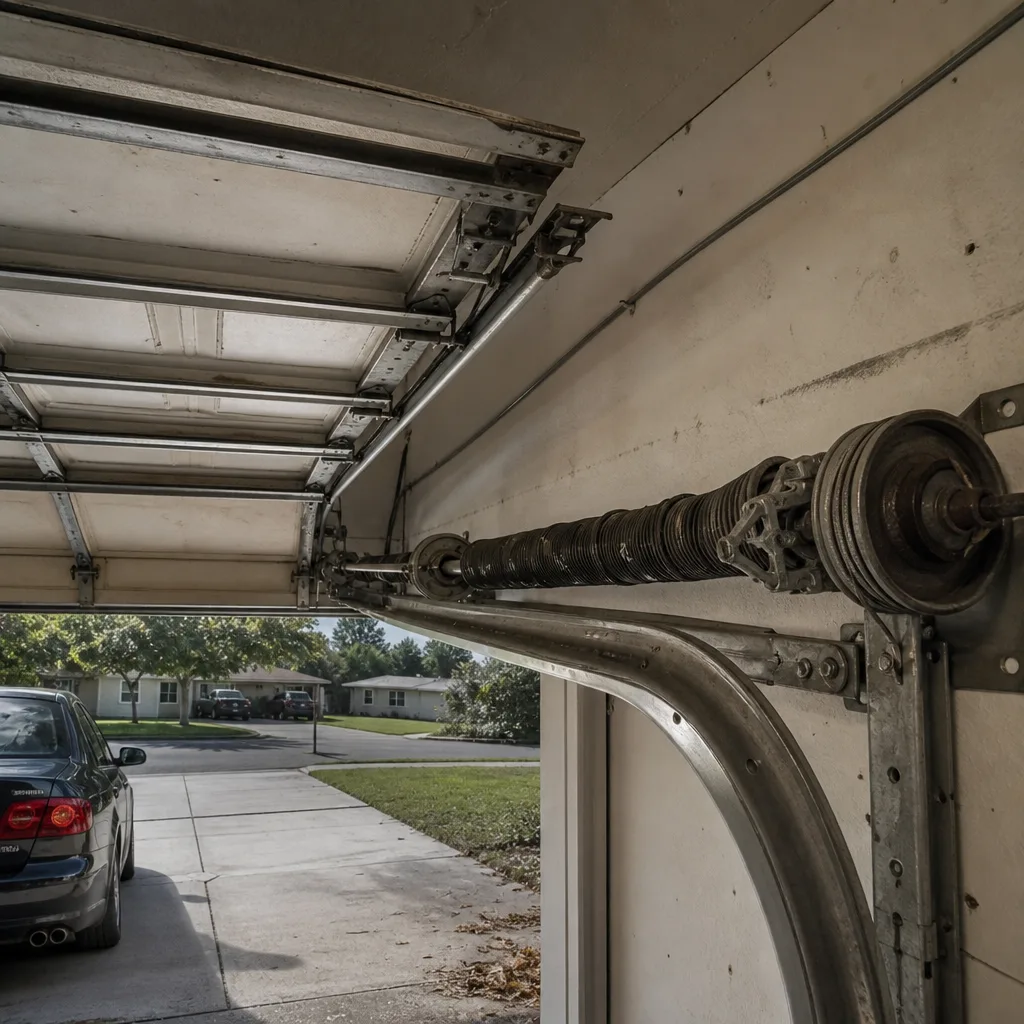 Before
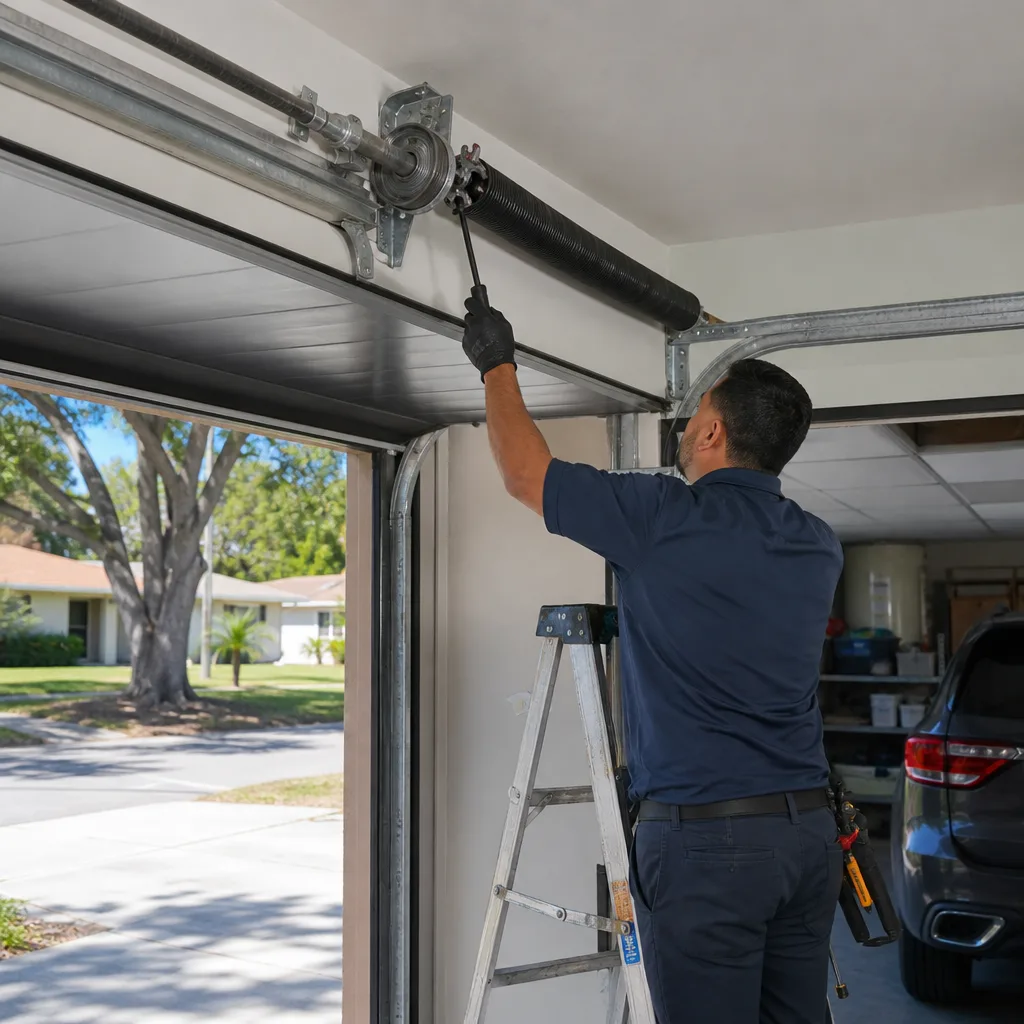 After
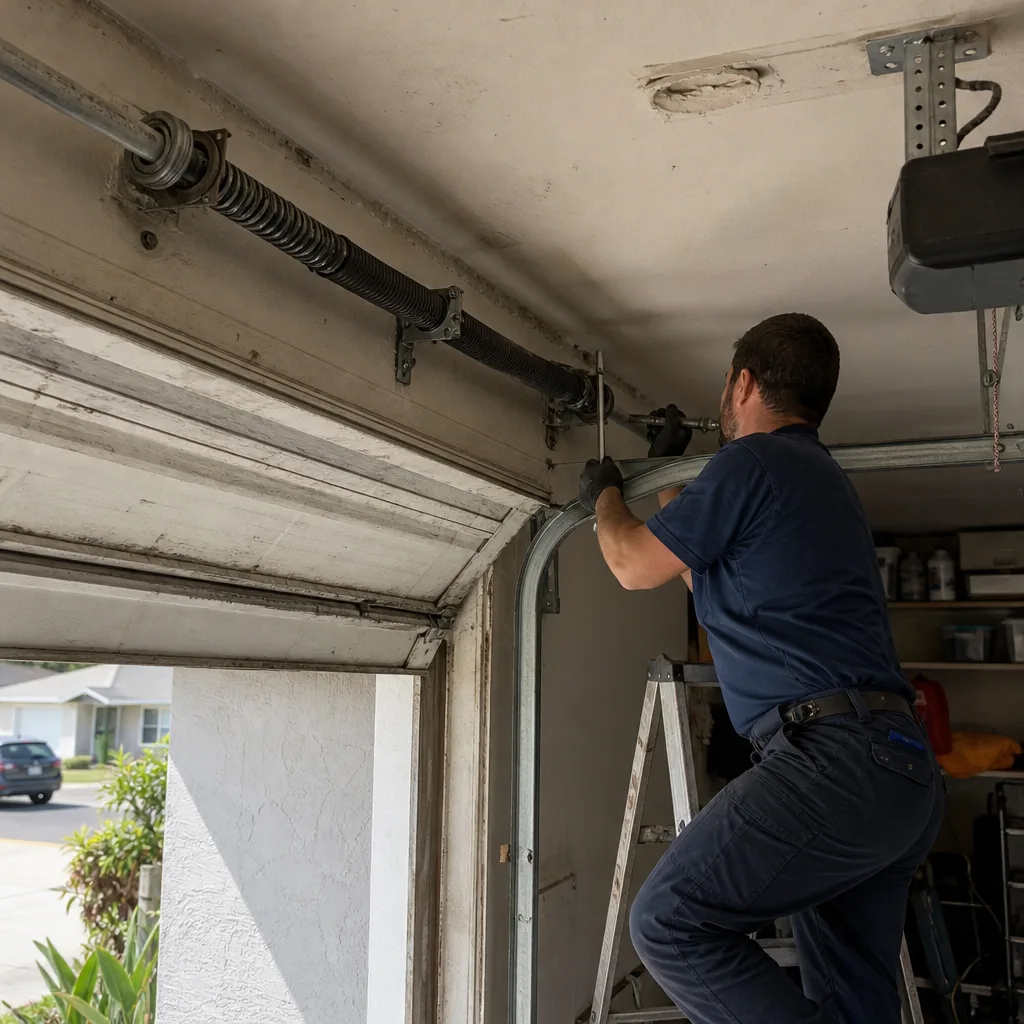 Before
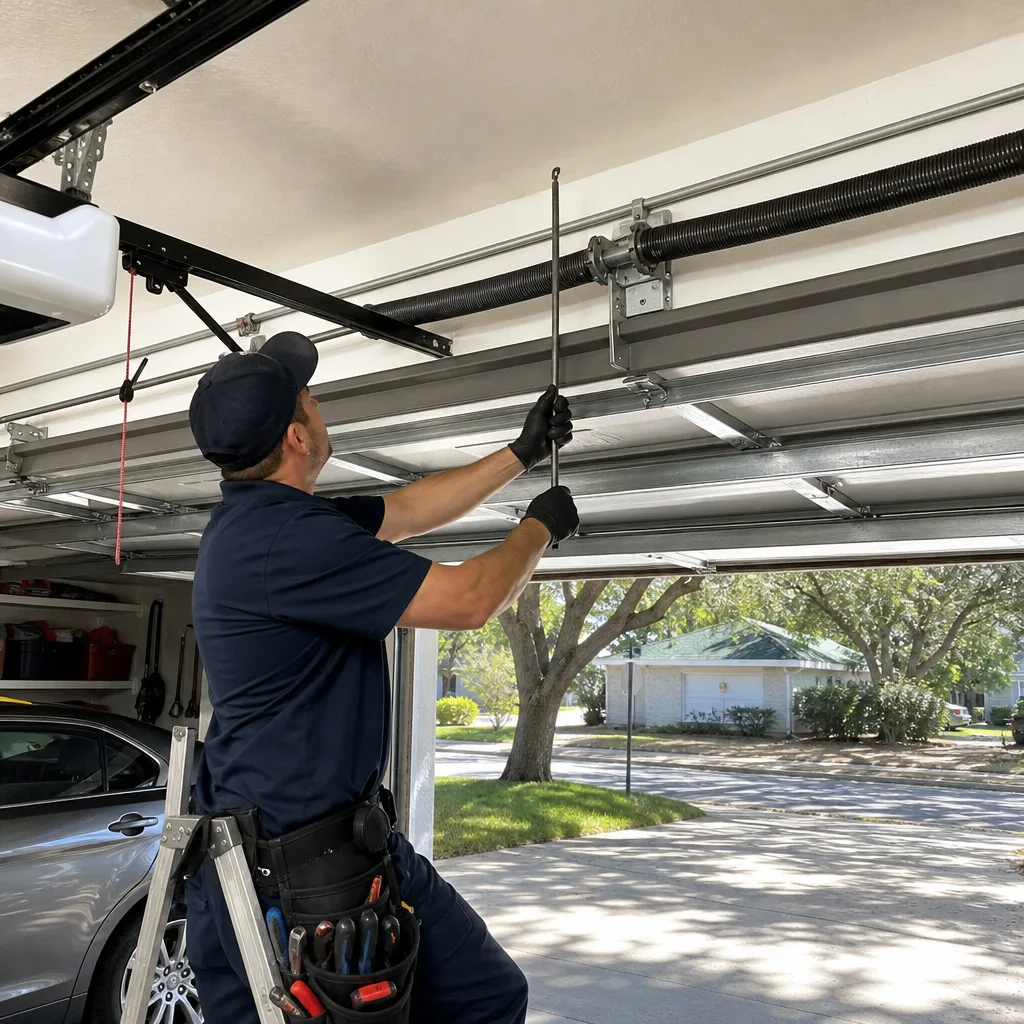 After
When to Call a Professional
Some garage door problems are obvious. A broken spring, a door off its track, or an opener that fails to move all need a technician with the right tools and parts. Torsion springs in particular are under enough tension to cause serious injury if mishandled, and we always recommend calling a trained professional rather than attempting a spring replacement yourself. Other problems are less obvious but just as urgent. If your door shudders on the way up, your cables look rusty, or your opener reverses for no reason, a diagnosis now costs less than a full failure later. St. Petersburg Garage Door Repair offers free estimates in St. Petersburg and most of Pinellas County. From broken spring to full installation, one call covers it. Call (855) 473-1420 and a technician who knows your brand will walk you through what needs to happen, with the price quoted and agreed before any work starts.
Frequently Asked Questions
A code-compliant garage door installation in St. Petersburg ranges from about $950 for a basic galvanized steel single door to $3,100 for a premium insulated fiberglass door, with most homeowners spending between $1,300 and $2,100 installed. The price depends on material, insulation level, wind-load certification, and hardware grade. Call (855) 473-1420 for an exact quote based on your specific door and location.
Yes. Pinellas County sits in a high-velocity hurricane zone, and the Florida Building Code requires every new garage door installation to meet specific wind-load standards for the home’s location and exposure category. Non-compliant doors fail inspections and pose a structural risk to your whole house during a storm.
Standard torsion springs in St. Petersburg last 7 to 10 years, depending on how often the door is cycled and how much salt exposure the hardware receives. Homes near the water often see spring failure at the shorter end of that range because salt air accelerates metal fatigue.
Yes. We carry logic boards, capacitors, gears, and sensors for the major residential opener brands, including LiftMaster, Chamberlain, Genie, and Craftsman. Most opener repairs are completed in a single visit. Call (855) 473-1420 and we would be glad to diagnose the problem over the phone before we arrive.
No single brand is universally best, but the key factor is the material and hardware grade rather than the brand name. Galvanized steel doors from Amarr and Wayne Dalton perform well with proper maintenance, while aluminum doors resist corrosion entirely at a higher upfront cost. The right choice depends on your distance from the water and your maintenance tolerance.
St. Petersburg receives more lightning strikes than nearly any other U.S. city, and those strikes cause power surges that damage opener logic boards and capacitors. Even a strike a block away can fry the circuit board through grid surge. A simple plug-in surge protector on the opener circuit prevents most of these failures.
No. We quote the repair or installation price before any work begins, and that number stays fixed unless you approve an additional line item during the job. There’s no surprise invoice at the end. Contact St. Petersburg Garage Door Repair home for details on how our quoting process works.
The Bottom Line
A garage door in St. Petersburg needs to be chosen and maintained differently than a door in most of the country. Salt air corrodes hardware, humidity shortens opener life, and hurricane code dictates which doors you can legally install. The smartest decisions are unglamorous ones: wind-rated construction, corrosion-resistant hardware, surge protection, and a maintenance schedule you actually follow. The brand of your door matters less than the material and the hardware grade, but buying from a team that recognizes your specific brand on arrival still saves you time and repeat visits. Start with the material, confirm the wind load, and read the quote line by line. Your door will repay you with a decade of quiet, reliable cycles. And if it does not, we are one call away.
Written by the team at St. Petersburg Garage Door Repair, serving St. Petersburg since 2011.